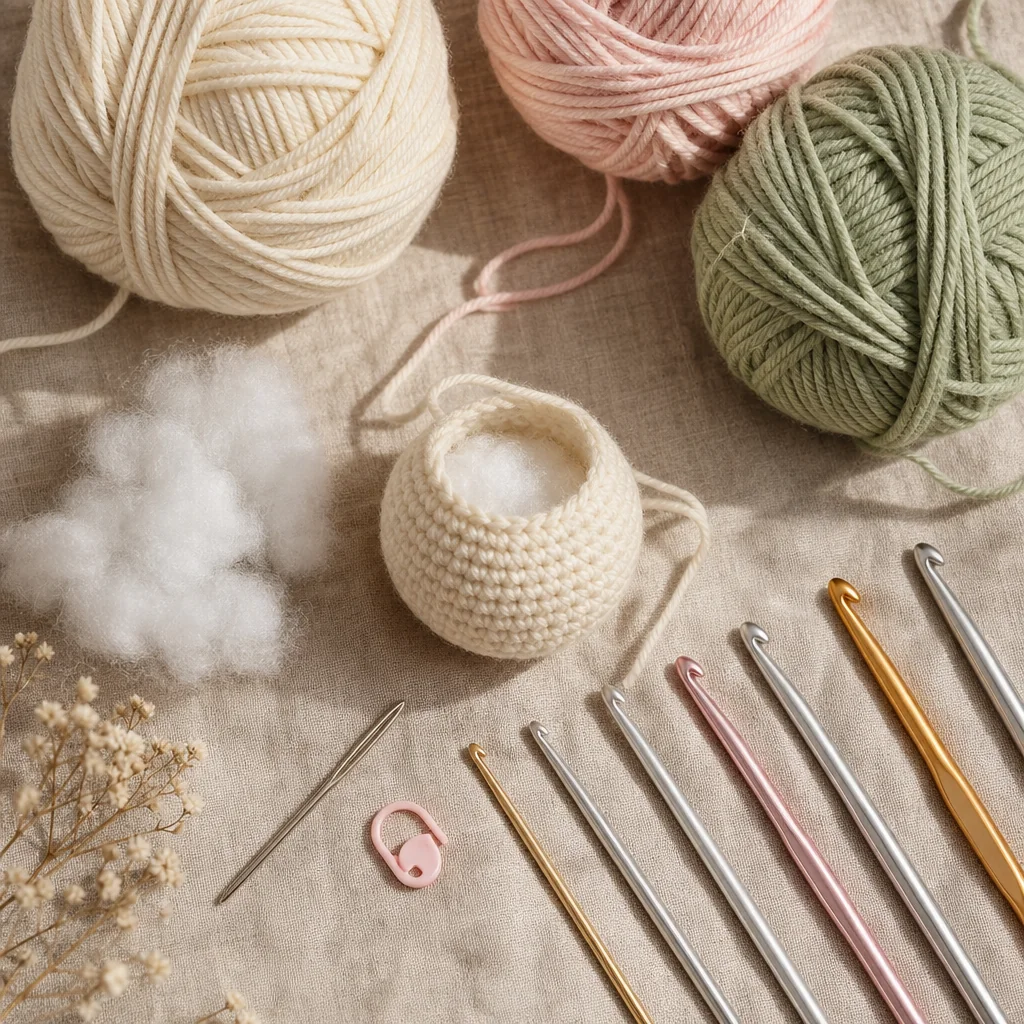
Choosing the Right Yarn and Hook Size for Amigurumi
by Crochets Studio — Sarah crafts whimsical amigurumi creatures from her sunny Toronto studio and loves helping makers discover their first perfect tension. When she's not crocheting, she's probably reorganizing her yarn stash—for the third time this month.
Amigurumi demands a dense fabric that hides stuffing, which means choosing the right yarn weight and sizing down your hook. The most reliable approach is to start with worsted or DK weight yarn and a hook one or two sizes smaller than the label suggests—this tension keeps your stitches tight and your finished creatures looking polished.
Understanding Amigurumi Fabric Requirements
Amigurumi isn't just about cute shapes—it's about creating a fabric dense enough that stuffing doesn't peek through the stitches. This requires intentional choices about both yarn and hook size from the very beginning.
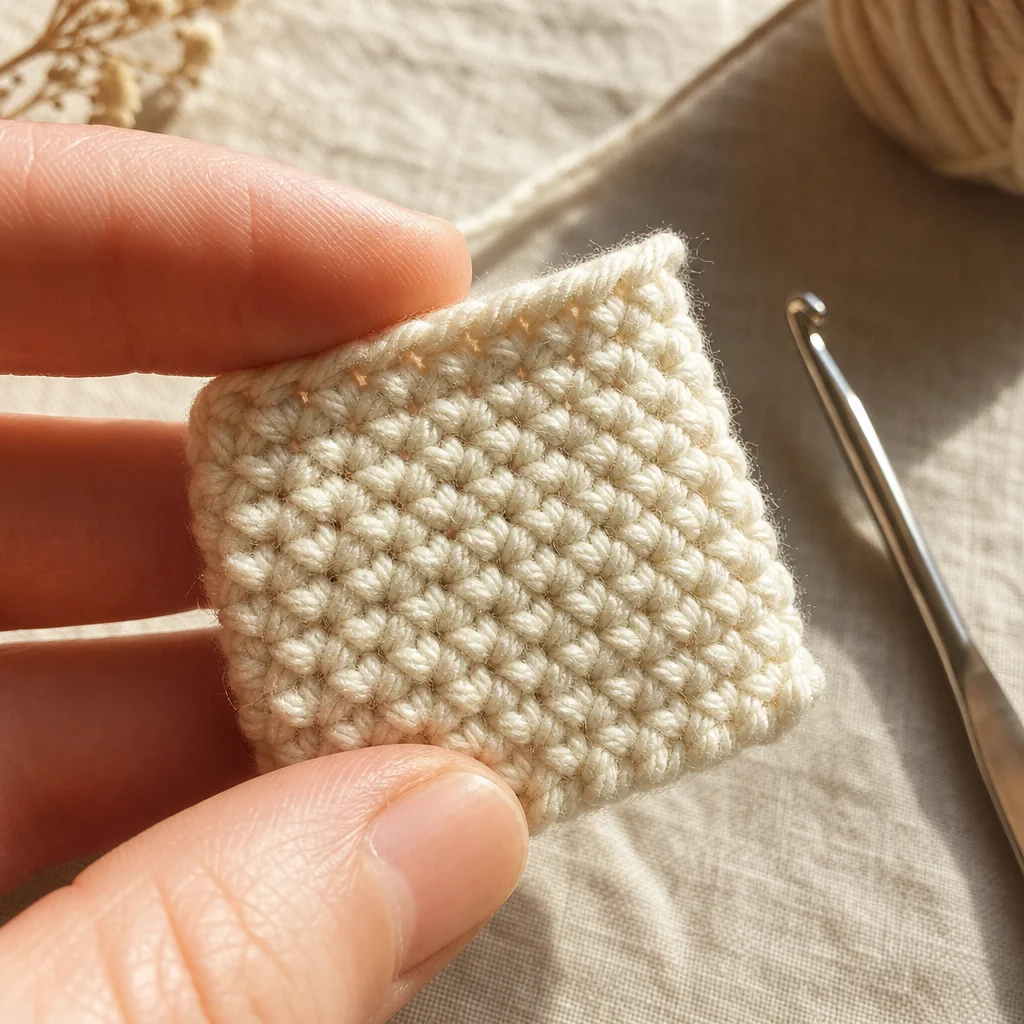
When you're stuffing a critter and expect it to hold its shape over time, loose fabric becomes your enemy. Gaps between stitches let fiberfill escape, and your carefully crafted animal starts looking lumpy or deflated. That's why amigurumi patterns almost always specify particular yarn weights and hook sizes: they're designed to create the right fabric density.
Selecting the Right Yarn Weight
Worsted Weight (Weight 4)
Worsted weight is the workhorse of amigurumi. It's thick enough to create a dense fabric without being overwhelming for beginners, and it works up quickly so your projects don't take forever. Most commercial amigurumi patterns call for worsted weight because it strikes the perfect balance between speed, finished appearance, and ease of stuffing.
Worsted weight comes in both acrylic and natural fibers. Acrylic worsted is budget-friendly, widely available in countless colors, and forgiving if you make mistakes—perfect for learning. Natural fiber worsted (like cotton or wool blends) tends to have better stitch definition and a more polished final look, though it usually costs more.
DK Weight (Weight 3)
If you want smaller, more delicate amigurumi, DK weight is your friend. It's lighter than worsted but still dense enough to hide stuffing when paired with the right hook. DK is excellent for creating creatures with fine details and smooth, refined stitches.
The trade-off is that DK takes longer to work up because each stitch is smaller, and you'll need more stitches to complete a project. For beginners, worsted is usually easier to manage, but once you're comfortable with tension, experimenting with DK opens up possibilities for more intricate designs.
Cotton vs. Acrylic
Cotton gives you sharper stitch definition, so mistakes are easier to spot (which helps while you're learning), and the finished fabric has a crisp, polished appearance. Cotton holds its shape beautifully and works especially well for amigurumi animals meant to look realistic or refined. The downside is cost—quality cotton yarn is more expensive than acrylic.
Acrylic is softer, more affordable, and gentler on the hands during long crochet sessions. It comes in virtually every color you can imagine, making it easy to find exactly what you need. Acrylic is forgiving for beginners because it's easier to pull out and fix mistakes without damaging the yarn. Many experienced amigurumi makers love acrylic for projects made to give to children because it's washable and durable.
The Hook-Sizing Strategy
Why Sizing Down Matters
The magic of tight amigurumi is this: always use a hook smaller than the yarn label recommends. If your yarn says "use a 5mm hook," grab a 3.5mm or 4mm instead.
When you size down, your stitches bunch closer together, creating a denser fabric. This density does two critical things: it hides the stuffing inside so your amigurumi looks smooth and professional, and it supports the structure so your finished piece holds its shape instead of sagging or stretching out.
Finding Your Hook Size
Start by checking your yarn label. Most yarn labels recommend a hook size based on creating a fabric suitable for garments. For amigurumi, you're not making a sweater—you're making a container for stuffing, so you need different guidelines.
If your yarn recommends a 5mm hook, start with 3.5mm or 4mm. If it recommends 4mm, try 3mm. This one-to-two-size reduction is your baseline. From there, you'll adjust based on your personal tension and how your gauge swatch looks.
Testing Your Gauge
Before starting an actual amigurumi project, crochet a small 4-inch square (10cm) using single crochet stitches with your chosen yarn and hook combination. Look at it carefully.
If you can see obvious gaps or spaces between the stitches—places where stuffing could peek through—your hook is too large. Go down another half-size and try again. Keep testing until your stitches sit snug against each other with no visible gaps. This is your working gauge for amigurumi.
Keep this swatch. You can reference it anytime you start a new project with the same yarn and hook combination.
Yarn Fiber Characteristics That Matter
Texture and Ply
While you're choosing yarn, aim for smooth, plied yarn (yarn made of multiple strands twisted together) rather than single-ply yarn. Plied yarn holds its shape better, gives you clearer stitch definition, and is more forgiving if your tension varies slightly.
Avoid fuzzy or heavily textured yarns for your first projects. Fuzzy fibers hide stitch details, making it hard to count stitches or spot mistakes. Textured yarns like bouclé or boucle create an uneven surface that doesn't showcase your amigurumi's shape as effectively. Once you're confident with your technique, experimenting with textured fibers can create interesting effects—but save that for later.
Color Considerations
Choose light or medium colors while learning. Darker colors make it harder to see individual stitches and mistakes, while very light colors can show every flaw. Mid-tone colors like soft gray, pale yellow, sage green, or cream are ideal for spotting where your tension is inconsistent and building good habits.
Once you're comfortable with your technique, go wild with color. Dark colors, gradients, and prints can create beautiful effects in amigurumi.
Putting It All Together: A Beginner's Setup
If you're starting fresh with amigurumi, here's the simplest, most reliable combination:
- Yarn: Worsted weight cotton or acrylic in a light-to-medium color
- Hook: One size smaller than the yarn label recommends (usually 3.5mm or 4mm for worsted)
- Test: Crochet a 4-inch gauge swatch and check for gaps
- Adjust: If you see gaps, go down another half-size
This setup works for nearly every beginner amigurumi project because it creates the right fabric density without being complicated. The cotton/acrylic choice depends on your budget and preferences—both work beautifully.
Experimenting Once You're Comfortable
Once you've completed a few amigurumi projects and feel confident with your tension, start experimenting. Try a DK weight to see how finer details look. Test a hook size that's less dramatically smaller than recommended to create a slightly airier fabric for different effects. Mix fiber types (like a cotton/acrylic blend) to find the combination that feels best in your hands.
Experimentation is where amigurumi becomes fun rather than formula-following. You'll discover that slightly looser tension might work for a soft, squishy toy, while tighter tension creates a more structured, realistic animal. These variations all come from tweaking the yarn-hook combination.
Common Mistakes to Avoid
Starting with fuzzy yarn: It hides mistakes when you're trying to learn from them.
Using a hook that's too large: This is the most common reason amigurumi stuffing shows. When in doubt, go smaller.
Skipping the gauge test: A 4-inch swatch takes five minutes and prevents disappointment later.
Choosing dark colors as a beginner: You won't see tension inconsistencies, and you won't improve as quickly.
Assuming all worsted weight is the same: Yarn thickness can vary between brands. Test your gauge even if you've used the same hook size before.
Final Tips for Success
Yarn and hook choice is only half the equation—your personal tension matters too. Two crocheters using identical yarn and hook sizes might create different fabric densities based on how tightly they hold their yarn and how firmly they pull stitches through.
If you find your amigurumi tends to have loose stitches no matter what hook you choose, focus on tension first. Hold your yarn slightly tighter, pull through each stitch with intention, and practice until you develop consistency. Then, if you still need a tighter fabric, size down your hook.
The goal isn't perfection—it's understanding how yarn weight, hook size, and your own tension work together to create the dense fabric amigurumi needs. Once you grasp that relationship, you're equipped to make thoughtful choices about every project you create.
Next step
Use our Yarn & Hook Calculator