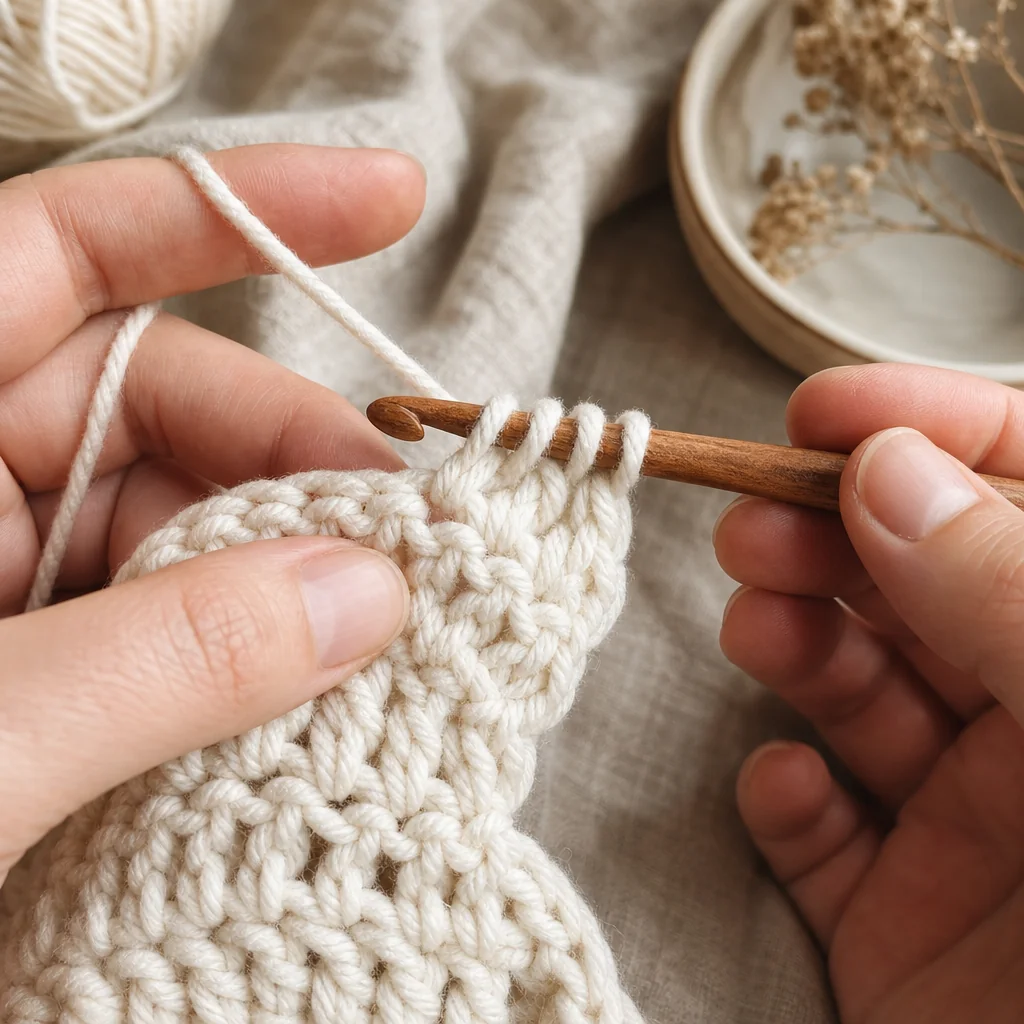
How to Double Crochet: Step-by-Step Tutorial with Photos
by Crochets Studio — Sarah is a crochet designer and teacher based in Montréal who believes that learning new stitches should feel approachable, not intimidating. She's been crocheting for over 15 years and loves helping beginners discover the rhythm and joy of working with yarn.
Double crochet is one of the most versatile stitches in crochet, creating fabric that's taller and more open than single crochet while working up nearly twice as fast. This stitch forms the foundation for countless patterns, from cozy afghans to lightweight shawls, and once you understand the basic technique, you'll find yourself reaching for it again and again. Whether you're ready to move beyond single crochet or looking to refresh your technique, this step-by-step guide will walk you through every yarn over and loop.
What is Double Crochet?
Double crochet (abbreviated as "dc" in patterns) is a foundational stitch that stands approximately twice as tall as single crochet. It creates an open, airy fabric with visible gaps between stitches, making it ideal for projects where you want drape, breathability, or faster progress. The stitch gets its name from the fact that you yarn over before inserting your hook, creating an extra loop that results in a taller stitch.
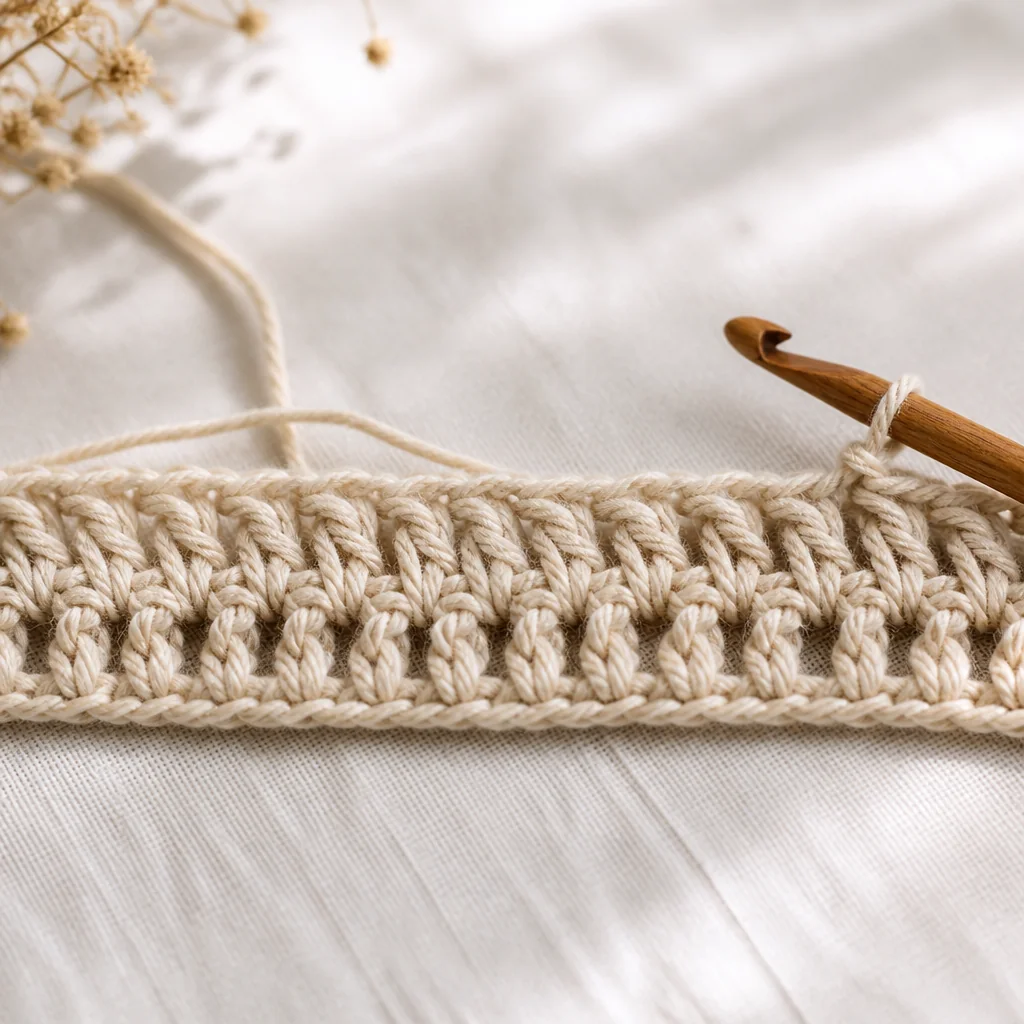
Unlike single crochet, which produces a dense, sturdy fabric, double crochet strikes a balance between structure and flexibility. This makes it the go-to stitch for afghans, lightweight sweaters, market bags, and any project where you want texture without excessive weight. Many classic patterns, including granny squares and ripple afghans, rely heavily on double crochet as their primary stitch.
The technique involves working through three loops in two distinct stages, which might feel awkward at first if you're coming from single crochet. But with practice, the rhythm becomes second nature, and you'll appreciate how quickly your projects grow.
Materials You'll Need
Before you begin, gather these basic supplies:
-
Yarn: Medium-weight (worsted/aran weight, category 4) yarn works best for learning. Choose a light, solid color so you can easily see your stitches. Avoid dark colors, highly textured yarns, or anything fuzzy while you're building muscle memory.
-
Crochet hook: A 5.0mm (US H-8) hook pairs well with worsted weight yarn. Check your yarn label for the recommended hook size, but don't worry about getting it exactly right for practice.
-
Scissors: For snipping yarn tails when you're done.
-
Yarn needle: Optional for this tutorial, but helpful if you want to weave in ends later.
Make sure you're comfortable with making a foundation chain and holding your hook before diving into double crochet. If chains still feel wobbly, spend a few minutes practicing those first.
Step-by-Step: How to Double Crochet
Step 1: Create Your Foundation Chain
Start by making a foundation chain of any length. For practice, 15-20 chains works well. Remember that double crochet needs turning chains to match its height, so you'll add 2 extra chains at the end. These turning chains count as your first double crochet stitch.
For example, if you want 10 double crochet stitches in your first row, chain 12 total (10 + 2 for turning).
Step 2: Yarn Over Before Inserting Your Hook
This is the defining move of double crochet. Wrap the yarn over your hook from back to front, creating an extra loop. Your hook should now have one loop from your chain plus the yarn over.
Skip the first two chains (these are part of your turning chain), and locate the fourth chain from your hook. This is where you'll insert your hook for your first actual stitch. The turning chain of 2 will count as a stitch itself.
Step 3: Insert Hook and Pull Up a Loop
Insert your hook under both top loops of that fourth chain (or under just the back bump if you prefer a cleaner edge—this is a personal choice). Yarn over again and pull through the chain only. You should now have three loops on your hook: the original loop, the yarn over from Step 2, and the loop you just pulled through.
This is the moment when double crochet differs most from single crochet. In single crochet, you'd pull through both loops immediately. Here, you'll work in two stages.
Step 4: Yarn Over and Pull Through Two Loops
Yarn over once more and pull through the first two loops on your hook. You'll still have two loops remaining on your hook. Take your time with this step—it's easy to accidentally pull through all three loops if you're used to single crochet.
Your stitch is starting to take shape now, but it's not complete yet.
Step 5: Yarn Over and Pull Through the Last Two Loops
Yarn over one final time and pull through both remaining loops on your hook. Now you have just one loop left on your hook, and you've completed your first double crochet stitch.
Look at what you've made: a tall, vertical post with a distinctive "V" shape at the top. That V is where you'll insert your hook when you work into this stitch on the next row.
Step 6: Continue Across the Row
Repeat Steps 2-5 in each chain across your foundation. Each stitch follows the same pattern: yarn over, insert hook, pull up a loop (three loops on hook), yarn over and pull through two, yarn over and pull through the remaining two.
When you reach the end of the row, count your stitches. Remember that your starting chain-2 counts as the first stitch, so if you wanted 10 stitches total, you should have made 9 additional double crochets after the turning chain.
Step 7: Turn Your Work and Chain 2
At the end of the row, chain 2. This is your turning chain, and it counts as the first double crochet of the new row. Turn your work clockwise (or counterclockwise—pick one direction and stay consistent).
Skip the first stitch at the base of your turning chain and work your first double crochet into the second stitch. This prevents your rows from growing wider over time.
Step 8: Work Into the Top of Stitches
When working double crochet into existing double crochet stitches (rather than chains), insert your hook under both loops of the "V" at the top of the stitch from the previous row. The process is otherwise identical: yarn over, insert, pull up a loop, yarn over and pull through two, yarn over and pull through two.
At the end of each row, make sure you work your last stitch into the top of the turning chain from the previous row. This keeps your edges straight and prevents you from accidentally decreasing.
Common Mistakes and How to Fix Them
Uneven edges: If your work is getting wider or narrower, you're either missing the turning chain at the end of rows or accidentally working into the first stitch (which you should skip). Count your stitches at the end of each row until this becomes automatic.
Stitches too tight or too loose: Tension comes with practice. If your stitches are tight, try relaxing your grip on the yarn. If they're loose, maintain a bit more tension with your guiding hand.
Forgetting the initial yarn over: If your stitches look more like single crochet, you're probably skipping the yarn over before inserting your hook. This is the most common mistake when transitioning from single to double crochet.
Pulling through all three loops at once: This creates a shorter, distorted stitch. Remember: yarn over and pull through two loops, then yarn over again and pull through the last two. Two separate steps.
What to Make with Double Crochet
Once you're comfortable with the basic stitch, you can:
-
Create simple blankets: Double crochet afghans work up quickly and have beautiful drape. Try alternating colors every few rows for stripes.
-
Make scarves and cowls: The open texture is perfect for lightweight accessories that aren't too bulky.
-
Practice granny squares: The classic granny square uses clusters of double crochet stitches worked in rounds.
-
Combine stitches for texture: Try alternating rows of single crochet and double crochet, or work double crochet stitches in different locations (front post, back post) for ribbing and texture.
Tips for Building Speed and Consistency
Practice the rhythm: Double crochet has a natural cadence: yarn over, insert, pull through (3 loops), yarn over, through two, yarn over, through two. Say it out loud as you work until it becomes automatic.
Watch your tension: Consistent tension creates consistent stitches. Your work should be firm enough to hold its shape but loose enough that you can easily insert your hook.
Count regularly: Until you develop an eye for stitch count, count after every row. It's much easier to fix a mistake right away than to discover it five rows later.
Use stitch markers: If you're worried about losing track of your turning chains, place a locking stitch marker in the top of the turning chain as a visual reminder.
Give yourself time: Double crochet involves more steps than single crochet, so don't expect to match your single crochet speed right away. Your hands need time to learn the new motion.
Moving Forward
Double crochet opens up a huge range of patterns and projects. Once you're comfortable working in straight rows, explore working in the round, trying stitch variations like half double crochet (shorter) or treble crochet (taller), and experimenting with different yarn weights.
The beauty of double crochet is its versatility. It's substantial enough for structure but open enough for drape. It's fast enough for large projects but precise enough for detailed work. Master this stitch, and you'll have a foundational skill that serves you in countless patterns to come.