How to Half Double Crochet: The Essential Stitch Beginners Often Skip
by Crochets Studio — A textile artist and crochet instructor based in Vancouver, I've spent over a decade helping beginners find their rhythm with hook and yarn. I believe the best projects are the ones you actually finish, and that starts with mastering the fundamentals.
The half double crochet (hdc) is the Goldilocks of crochet stitches—not too tight, not too loose, just right for countless projects. It sits perfectly between single and double crochet in height, giving you a fabric with beautiful drape and structure. Once you master this often-overlooked stitch, you'll wonder how you ever crocheted without it.
What You'll Need
- Worsted weight yarn in your choice of color
- Size H/8 (5mm) crochet hook
- Scissors
- Yarn needle for weaving in ends
Understanding the Half Double Crochet
The half double crochet deserves far more attention than it typically gets. While beginners often race from single crochet straight to double crochet, they're missing out on one of the most practical stitches in the crochet repertoire.
In terms of height, the half double crochet measures approximately 3/4 the height of a double crochet and about 1.5 times the height of a single crochet. This middle ground gives you several advantages: your projects work up faster than with single crochet, but you still get more stitch definition and fabric density than double crochet provides.
The stitch abbreviation is "hdc" in patterns, and you'll typically see it called for in projects like cozy scarves, textured blankets, slouchy beanies, and market bags where you want both structure and drape.
Step-by-Step: How to Work a Half Double Crochet
Starting Your Foundation
Before working your first half double crochet, you'll need a foundation chain. Chain any number of stitches for practice—20 to 25 makes a good swatch. Remember that you'll need to add 2 extra chains at the beginning for your turning chain.
The Basic Stitch Technique
Step 1: Yarn Over
Wrap the yarn over your hook from back to front. This is what distinguishes the half double crochet from the single crochet—you start with a yarn over before inserting your hook.
Step 2: Insert Your Hook
Insert your hook into the third chain from your hook (or the next stitch if you're working into an existing row). The two skipped chains count as your first half double crochet and act as the turning chain.
Step 3: Yarn Over and Pull Through
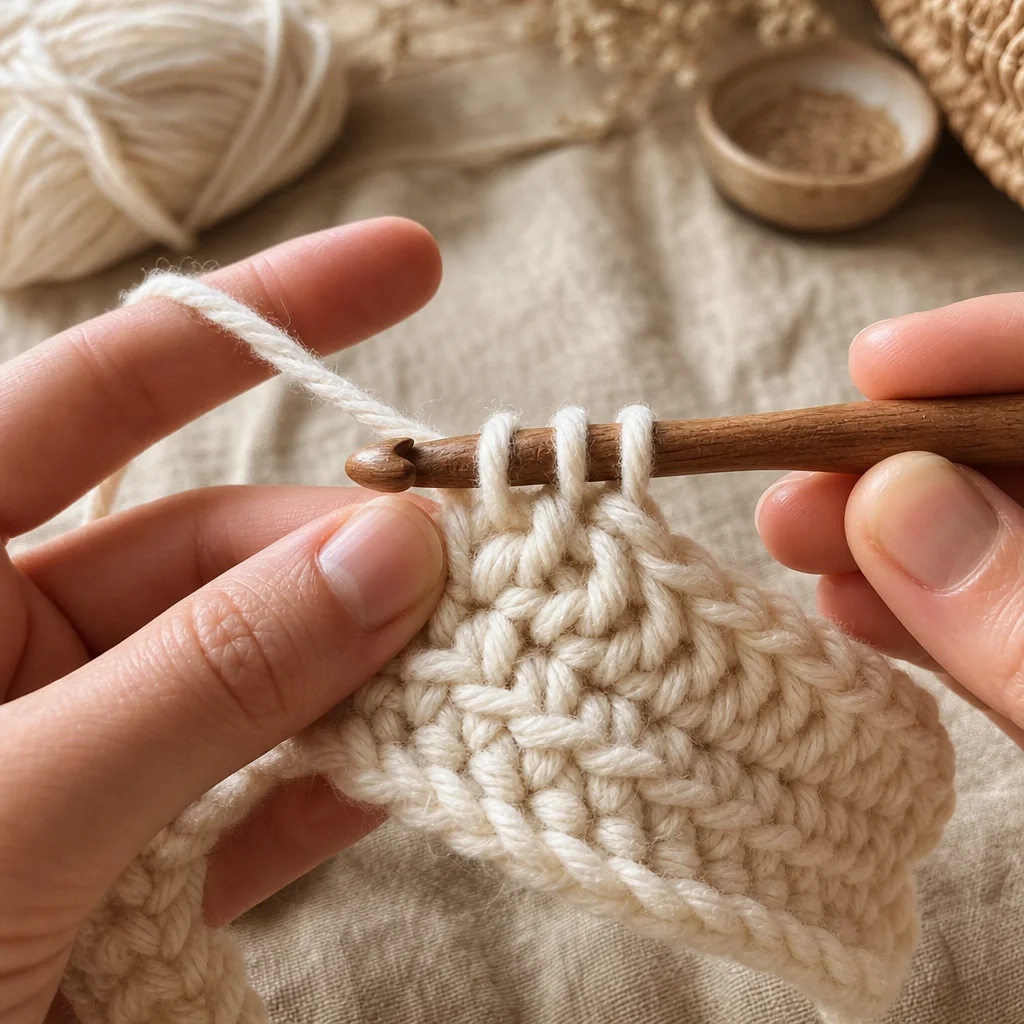
Yarn over again and pull up a loop through the stitch. Take a moment to check your hook—you should now have exactly 3 loops sitting on your hook. This is the distinctive characteristic of the half double crochet mid-stitch.
Step 4: Complete the Stitch
Yarn over one final time and pull through all 3 loops on your hook in one smooth motion. You've just completed your first half double crochet.
Step 5: Continue Across
Repeat this process across the row: yarn over, insert into the next stitch, yarn over and pull up a loop (3 loops on hook), yarn over and pull through all 3 loops. Work into each stitch across.
Turning and Starting New Rows
When you reach the end of your row, chain 2 and turn your work. These 2 chains serve as the turning chain and count as the first half double crochet of the new row. Skip the first actual stitch at the base of your turning chain and work your first hdc into the second stitch. At the end of the row, work your last hdc into the top of the turning chain from the previous row.
Common Mistakes and How to Fix Them
Problem: Edges That Slant or Grow
Cause: You're either accidentally increasing by working into the first stitch after your turning chain, or you're missing the turning chain at the end of the row.
Fix: Always skip the first stitch after your turning chain—those 2 chains count as a stitch. At the row's end, make sure to work into the top of the turning chain. Mark it with a stitch marker if needed.
Problem: Loose or Uneven Stitches
Cause: Inconsistent tension, especially when pulling through all 3 loops at once.
Fix: When you yarn over for that final pull-through, make it one decisive motion. Don't hesitate or pull too slowly—confident, smooth tension creates even stitches.
Problem: Getting Confused About Loop Count
Cause: Losing track of where you are in the stitch sequence.
Fix: Always pause and count your loops before the final pull-through. If you see 3 loops, you're ready to complete a half double crochet. If you see 2, you've likely done a single crochet by mistake.
When to Use Half Double Crochet
Perfect Project Types
Half double crochet shines in projects where you want the piece to have body but still maintain softness. Infinity scarves and cowls made with hdc have a beautiful drape that frames the face without being too stiff or too floppy. Baby blankets work up quickly while maintaining enough density to be warm and cozy.
Hats and beanies made with half double crochet have the perfect amount of stretch and structure—they hold their shape without being rigid. Market bags and totes benefit from the stitch's density, which prevents items from poking through while still allowing the bag to fold flat when empty.
Combining with Other Stitches
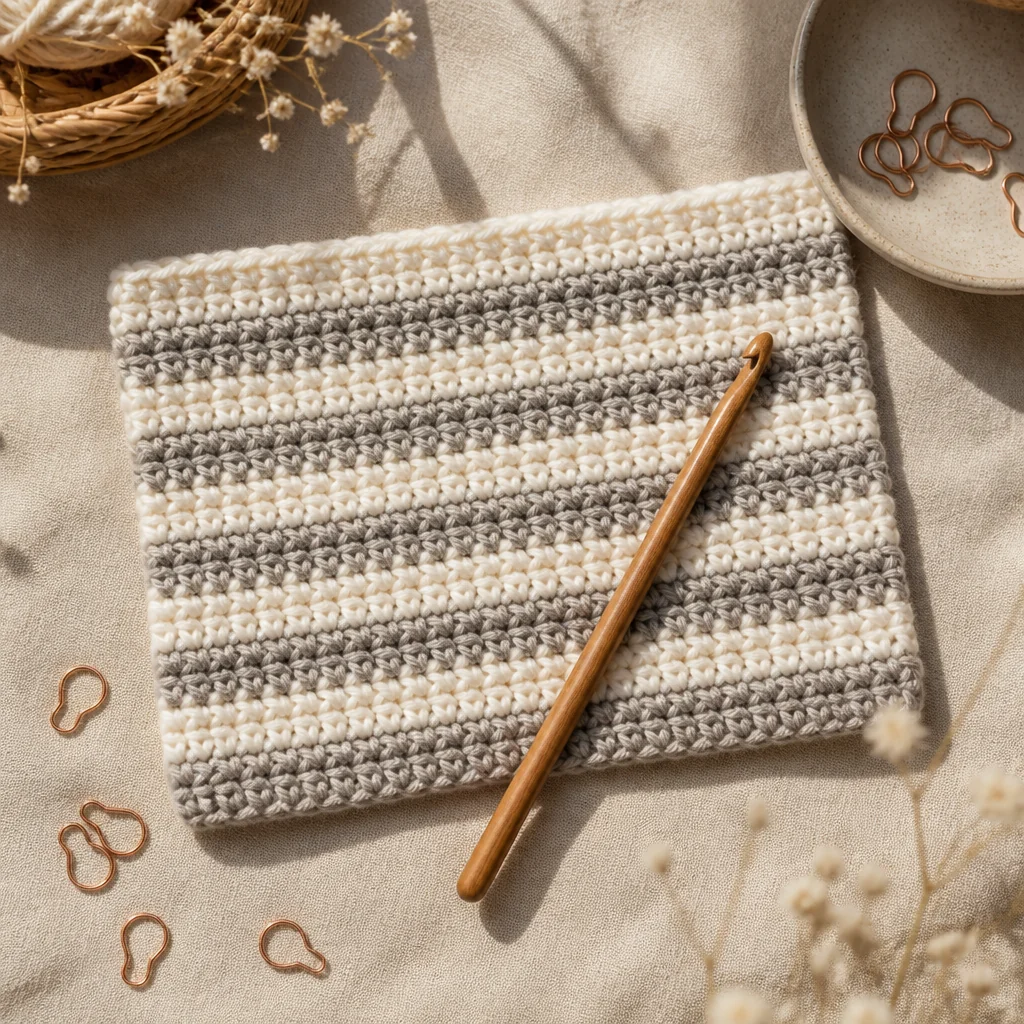
Many patterns combine half double crochet with other stitches to create texture. Try alternating rows of hdc with rows of single crochet for a subtle striped texture effect. The waistcoat stitch (also called the center single crochet) uses the half double crochet's three loops as insertion points for a stunning woven look.
You can also create beautiful color work with half double crochet. Because the stitches are relatively short, color changes create crisp lines perfect for tapestry crochet or simple stripes.
Practicing Your Technique
The 30-Minute Challenge
Set a timer for 30 minutes and work continuous rows of half double crochet. Don't worry about making anything specific—just focus on the rhythm of the stitch. By the end, you'll notice your tension evening out and your hands finding a natural flow.
Pay attention to the sound of your hook. Experienced crocheters develop a rhythm where each stitch makes a consistent soft click. When you hear that regularity, you know your tension is becoming more controlled.
Creating a Gauge Swatch
Make a proper gauge swatch in half double crochet: chain 24, then work in hdc for at least 20 rows. This gives you a piece large enough to accurately measure your stitches per inch, which is crucial information for any future projects. Most patterns will list gauge in terms of stitches and rows per 4 inches, measured after the piece has been gently blocked.
Taking It Further
Once you're comfortable with the basic half double crochet, explore variations like the half double crochet through the back loop only (hdc-blo), which creates a ribbed texture perfect for hat brims and cuffs. The standing half double crochet lets you join new yarn without using a slip stitch, creating invisible color changes.
The extended half double crochet adds one more yarn over at the end, making a stitch that's just slightly taller—perfect for when double crochet feels too open but regular hdc feels too dense.
Your Next Steps
Now that you've mastered the half double crochet, you have access to hundreds of patterns that were previously off-limits. This stitch forms the foundation for countless texture stitches, color work techniques, and practical everyday projects. The more you practice, the more you'll appreciate why this "in-between" stitch is actually the star of the show for so many crocheters.
Keep your practice swatch handy as a tension reference, and don't be afraid to rip back and try again if your stitches aren't quite right. Every crocheter has frogged countless rows while learning—it's part of the process, not a sign of failure.