Best Crochet Stitches for a Cozy Winter Blanket
by Crochets Studio — Sophie Langlois is a Montreal-based fiber artist who learned to crochet from her grandmother during long Quebec winters. She specializes in cozy blankets and teaches beginners to embrace texture over perfection.
Not all crochet stitches keep you equally warm—some create dense, insulating fabrics while others leave you shivering. The key is choosing stitches that trap air between loops and create texture, turning your blanket into a thermal barrier against winter's chill. Whether you're a beginner looking for simple warmth or an experienced crocheter seeking the perfect drape, these four stitch families will transform your yarn into the coziest winter essential.
Why Stitch Choice Matters for Warmth
The science behind a warm blanket isn't complicated: trapped air is an excellent insulator. When you crochet with stitches that create pockets, folds, and layered texture, you're building tiny air chambers throughout the fabric. These pockets slow heat transfer, keeping body warmth close and cold air out.
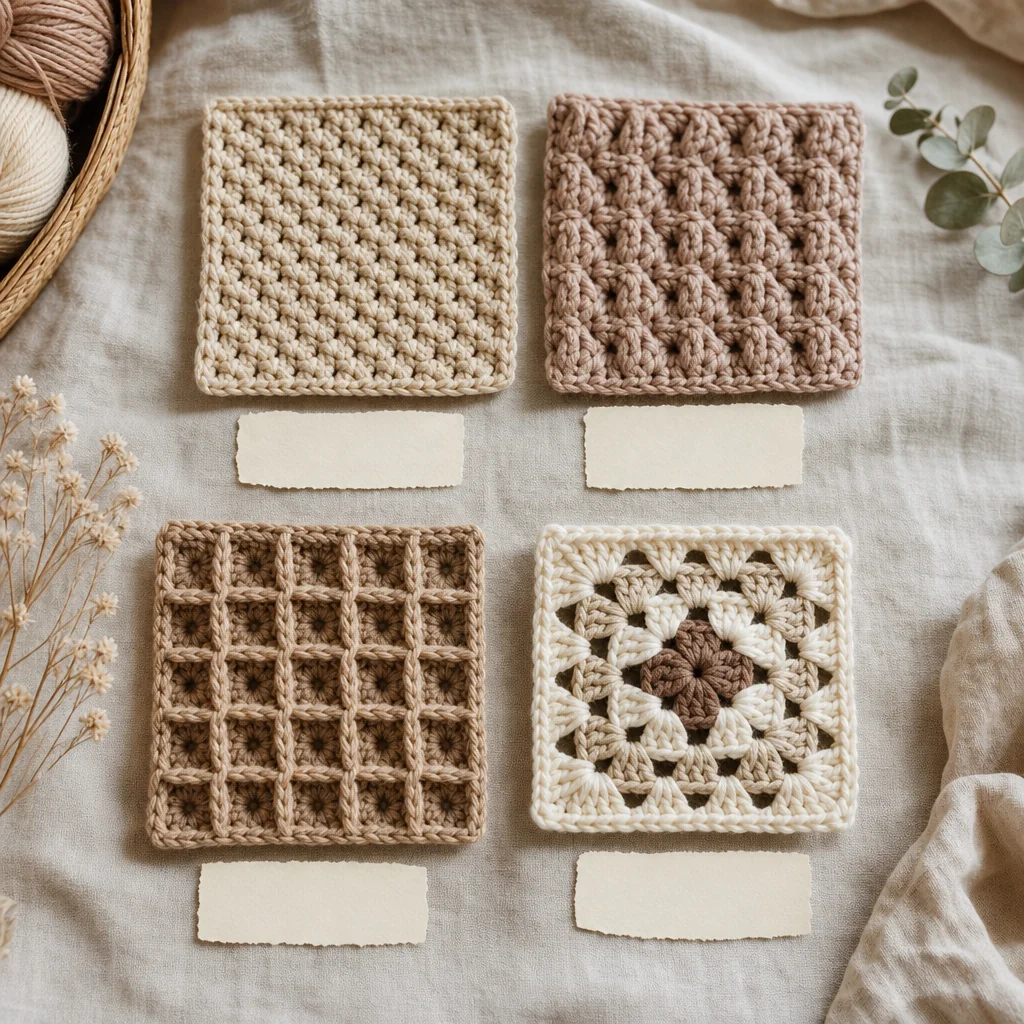
Dense stitches like single crochet create a tight fabric, but they don't trap much air. Lacy stitches have plenty of holes but let drafts through. The sweet spot is a stitch that's textured enough to create depth while remaining solid enough to block wind. That's where these four winners come in.
Your yarn choice amplifies the effect. Wool, alpaca, and acrylic blends all have different thermal properties, but the stitch structure matters more than you might think. Even cotton can feel surprisingly warm when worked in the right pattern.
Moss Stitch: The Beginner's Warm Blanket Friend
Also called linen stitch, moss stitch is deceptively simple—it alternates single crochets and chain spaces in an offset pattern that creates a woven, almost fabric-like texture. The beauty is in what you can't see: those chain spaces create air pockets without leaving visible holes.
The rhythm is meditative once you settle in: single crochet into a chain space, chain one, skip the next stitch, repeat. Every row shifts the pattern, so your single crochets land in the previous row's chain spaces. The result is a sturdy, slightly stretchy fabric that drapes beautifully and insulates remarkably well.
Because it uses only single crochet and chain stitches, moss stitch is genuinely beginner-friendly. There's no stitch height to worry about, no front post versus back post confusion. You can focus entirely on building an even tension, and the stitch pattern will hide minor inconsistencies.
For a winter blanket, work moss stitch in worsted or bulky weight yarn with a hook one or two sizes larger than recommended. The looser gauge makes the fabric loftier and traps even more air. A 50" × 60" throw in bulky yarn takes about 1200-1400 yards and works up faster than you'd expect.
Suzette Stitch: Cloud-Like Softness
Suzette stitch has taken over crochet social media for good reason—it produces an impossibly soft, squishy fabric that looks complex but uses only basic stitches. The pattern alternates rows of single crochet with rows that combine single crochet and V-stitches (a double crochet, chain one, double crochet combination worked into the same space).
What makes Suzette special is the interplay between these rows. The V-stitches create raised columns on one side while the single crochet rows nestle between them, producing a fabric with depth and springiness. When you work it in a soft yarn like acrylic or a wool blend, the blanket feels almost pillowy.
The learning curve is minimal—if you can chain, single crochet, and double crochet, you can handle Suzette. The first few rows might feel awkward as you figure out where to place each stitch, but by row five or six, your hands will remember the pattern. Many crocheters find it meditative because the rhythm is so regular.
Suzette works beautifully in any weight from sport to bulky, but for a winter blanket, stick with worsted or heavier. The stitch naturally creates a fabric that's about 15% thicker than the same yarn worked in basic single crochet, which translates directly to better insulation. Plan for about 1500 yards of worsted weight for a generous lap blanket.
Waffle Stitch: Texture and Warmth Combined
Waffle stitch creates a deeply ridged, almost three-dimensional fabric using front post double crochets. If you've mastered basic double crochet, front post technique is the next logical step—instead of inserting your hook under the top loops of a stitch, you work around the post (the vertical body) of the stitch from the front.
The pattern typically alternates rows of regular double crochets with rows that combine front post double crochets and regular double crochets in a checkerboard arrangement. This creates vertical columns that stand proud of the fabric, separated by recessed squares. The result looks remarkably like a waffle or a thermal weave fabric.
Those ridges aren't just decorative—they create serious insulation. The raised posts trap air, and the recessed areas add a second layer of thermal protection. A waffle stitch blanket is noticeably warmer than a flat fabric made with the same yarn and hook size.
The trade-off is that waffle stitch uses more yarn than simpler patterns. A throw-sized blanket might need 1800-2000 yards of worsted weight. It also works up a bit more slowly because of the post stitches. But for crocheters who love texture and want maximum warmth, it's worth every extra yard and hour.
One tip: keep your tension loose with waffle stitch. Tight post stitches create a stiff, cardboard-like fabric. A relaxed hand produces a blanket that's both warm and drapey.
Granny Squares: Modular Warmth
The classic granny square might seem too open for a winter blanket, but joined squares create a surprisingly warm fabric. The secret is in the layering—when you crochet squares and join them, you're essentially creating a double-thick fabric at every seam. Those overlapping edges add insulation that a continuous fabric can't match.
Traditional granny squares use clusters of double or treble crochets separated by chain spaces, worked in rounds from the center out. You can make them as solid or as lacy as you like by adjusting the number of chains between clusters. For winter warmth, keep chain spaces to one or two chains maximum.
The modular nature makes granny square blankets perfect for using up stash yarn—you can work each square in whatever colors and textures you have on hand, then join them into a cohesive whole. This approach also makes the project portable; you can carry a single square's worth of yarn and work on it anywhere.
Joining method matters for warmth. A flat slip stitch seam or whip stitch creates a smooth join with minimal bulk. A join-as-you-go method can be faster but sometimes leaves gaps. For maximum insulation, consider joining with a round of single crochet around each square before stitching them together—this creates a truly windproof fabric.
A lap blanket of 6" squares arranged in an 8×10 grid gives you 80 squares to make. In worsted weight, each square uses about 15-20 yards, so plan for 1400-1600 yards total plus joining yarn.
Maximizing Warmth: Hook Size and Yarn Choice
Regardless of which stitch you choose, going up a hook size (or two) makes a dramatic difference in warmth. A looser fabric traps more air, creating better insulation. The yarn label might recommend a 5mm hook, but try a 6mm or even 6.5mm for a blanket that's both warm and soft.
Yarn fiber changes the thermal equation too. Wool is naturally insulating and stays warm even when damp. Alpaca is lighter than wool but equally warm, with a silky drape. Acrylic is budget-friendly, easy to wash, and surprisingly effective at holding heat when worked in a textured stitch. Cotton is less insulating but works for milder climates or people who overheat easily.
Weight matters more than you might think. Bulky and super bulky yarns obviously work up faster, but they also create inherently warmer fabrics because of the thicker fiber diameter. A chunky waffle stitch blanket in super bulky yarn is almost comically warm—perfect for those -30°C Canadian nights when you're layering blankets on the couch.
Consider blends too. A wool-acrylic blend gives you wool's warmth with acrylic's easy care. Alpaca-silk blends are luxurious and temperature-regulating. Cotton-acrylic blends split the difference between breathability and insulation.
Finishing Touches for Year-Round Coziness
A warm blanket deserves a finish that matches its comfort. A simple single crochet border around the edge stabilizes the fabric and prevents curling. For extra luxury, work a round of reverse single crochet (crab stitch) for a neat, corded edge.
If you've made a granny square blanket, consider adding a full border that frames all the squares—two or three rounds of double crochet in a contrasting color can pull the whole design together while adding another layer of warmth at the edges.
Blocking isn't always necessary for blankets, but a light steam or wet block can even out your stitches and help the fabric relax into its final drape. Pin the blanket to your desired dimensions on a blocking mat or clean carpet, mist with water (or use a garment steamer), and let it dry completely.
For blankets you'll wash frequently, weave in ends with extra care and consider reinforcing joins on granny square projects. A blanket that's truly cozy gets used hard, and a little extra finishing work now prevents unraveling later.
Your Next Cozy Project Awaits
Choosing the right stitch transforms yarn into a winter essential that you'll reach for every cold evening. Whether you're drawn to the simplicity of moss stitch, the plush softness of Suzette, the architectural drama of waffle stitch, or the portable charm of granny squares, you're building more than a blanket—you're creating warmth, comfort, and a handmade heirloom.
Start with the stitch that matches your skill level and patience. Beginners thrive with moss stitch or simple granny squares. Intermediate crocheters will love Suzette's quick satisfaction. Advanced makers can dive into waffle stitch's textural complexity. Whatever you choose, use a larger hook, embrace texture, and crochet yourself something truly cozy.