Crochet Hook Size vs. Yarn Weight: Mastering Tension for Perfect Fit
by Crochets Studio — A lifelong maker and crochet educator, our writer has spent years helping students understand the fundamentals of tension and gauge. She believes that every crochet project succeeds when makers understand not just the what, but the why behind their tools and techniques.
The foundation of successful crochet lies in understanding how hook size and yarn weight work together to create your gauge. Rather than blindly following recommendations, learning to read your tension and adjust your tools ensures every project turns out the right size.
Why Hook Size and Yarn Weight Matter
When you pick up a new crochet pattern, you'll always see two crucial pieces of information: the recommended yarn weight and the hook size. These aren't arbitrary suggestions—they're the starting point for achieving the correct gauge, which is the number of stitches and rows within a specific measurement (usually 4 inches or 10 centimeters).
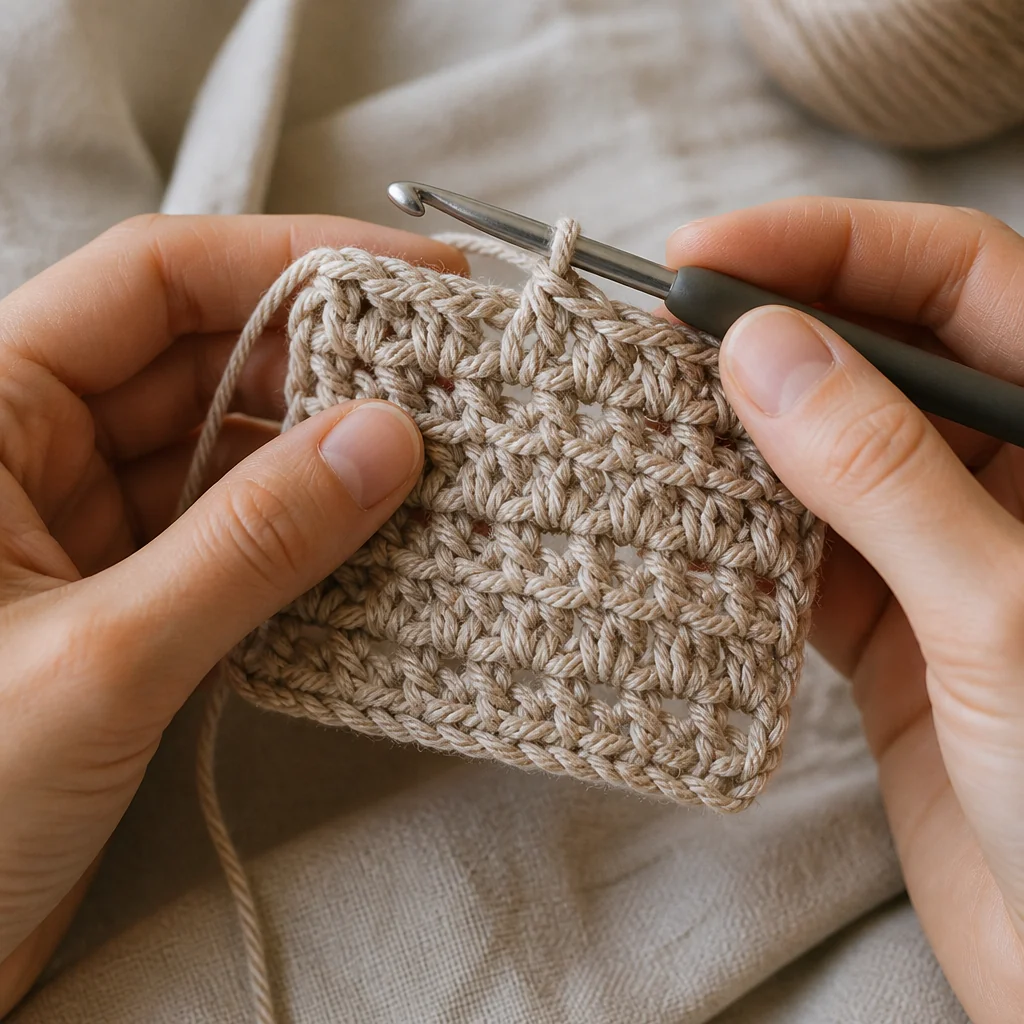
Gauge is what separates a sweater that fits beautifully from one that looks like a tent. It's what makes a baby blanket actually baby-sized instead of oversized. Hook size and yarn weight are the primary tools you use to control your gauge.
When yarn is too thick for your hook, your stitches become loose and floppy. When yarn is too thin, your stitches bunch up and create dense fabric that won't drape properly. The relationship between these two elements is foundational to everything you make.
Understanding the Yarn Weight System
Yarn weights are standardized into categories numbered 0 through 7, making it easier to find compatible materials across different brands and manufacturers.
The Standard Categories
Lace (0) is the finest yarn, creating delicate, intricate work. It pairs with tiny hooks, usually 000 to 1, and produces beautiful but time-intensive projects.
Super Fine (1) includes fingering and sock weight yarns. These work beautifully for garments that need drape, pairing with size 1 to 3 hooks.
Fine (2) encompasses sport and DK weights, offering a middle ground for sweaters and accessories. Try size 3 to 5 hooks.
Light Worsted (3) is incredibly popular in the crochet community. Size 5 to 7 hooks are standard, creating projects that work up quickly without being bulky.
Worsted (4) is what many people think of as "regular" yarn—thick enough to show stitch definition but not heavy. Size 7 to 9 hooks are typical.
Bulky (5) creates fast projects with dramatic stitch definition. Size 9 to 11 hooks work well.
Super Bulky (6) and Jumbo (7) are for statement pieces and very fast work, using size 11 and up.
These categories come with recommended hook size ranges printed on yarn labels, but here's the critical part: these are guidelines based on average tension, not rules written in stone.
Your Tension Is Your Signature
Every person who crochets has a unique tension—the amount of pressure they apply to yarn as it passes through their hook. This is as individual as handwriting.
Some crocheters naturally work with tight tension, pulling yarn snugly through their loops and creating compact, dense stitches. Others have loose tension, keeping yarn relaxed and creating airy, drapey fabric. Neither is wrong; tension is simply a reflection of how your hands move.
This is why two people using identical yarn and hook size can end up with completely different gauges. Your personal tension means the recommended hook size might not be right for you.
If you tend to work tightly, you might need to go up a hook size (or even two) from the yarn label recommendation to hit the pattern's target gauge. If you work loosely, you might go down a size or smaller. There's no shame in this adjustment—it's the sign of an experienced crocheter who understands their own craft.
Making Your Gauge Swatch
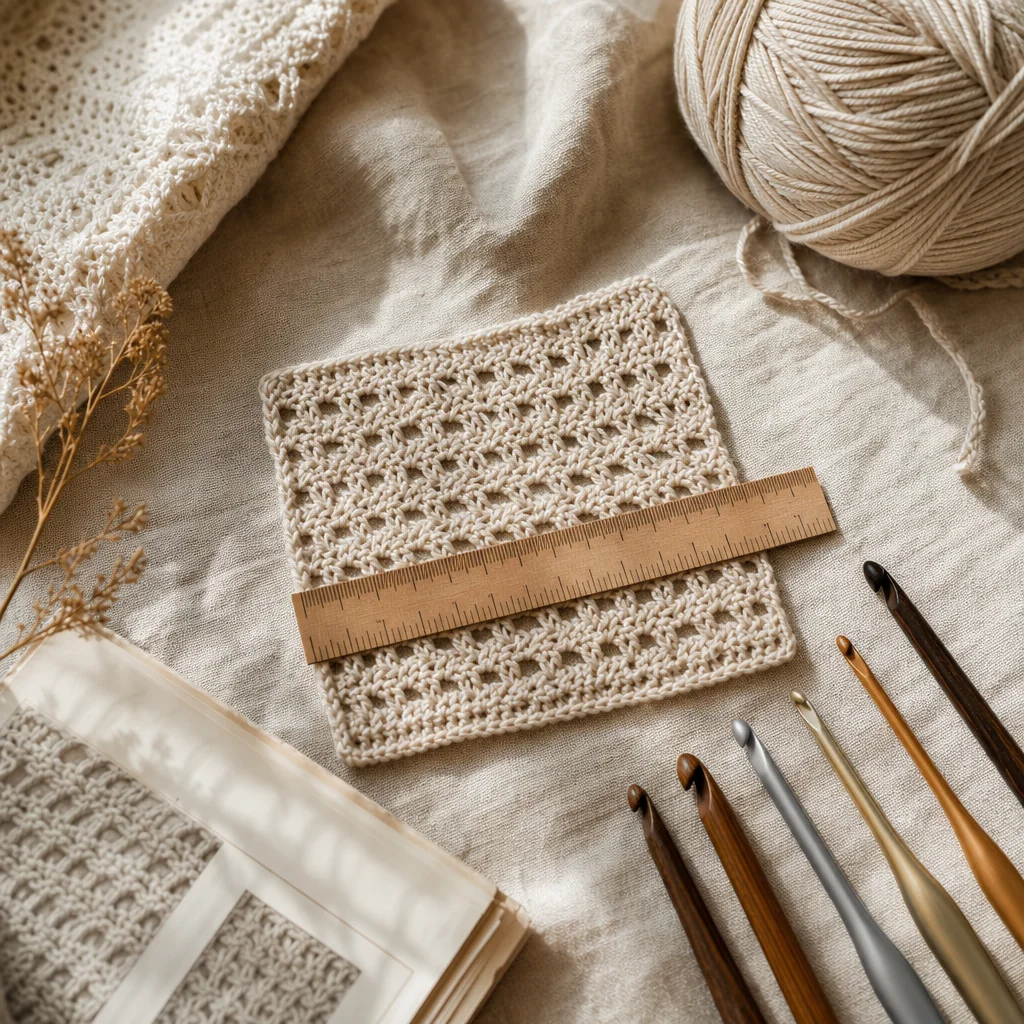
A gauge swatch is a small practice piece you crochet before starting the actual project. It's usually a 4-inch (10 cm) square, made using the stitch pattern from your project and the yarn and hook you plan to use.
Why This Small Investment Matters
Making a swatch takes 15 to 30 minutes, depending on the stitch and yarn weight. Ripping out a finished sweater that doesn't fit takes hours. A blanket that's the wrong size wastes yards of yarn. A swatch is insurance.
A swatch also lets you test whether you actually like working with this yarn and hook combination. Some combinations feel better in your hands than others. Discover this before committing to a full project.
How to Make and Measure Your Swatch
Cut a length of yarn about 3 times longer than the desired swatch width. Using your chosen hook, work in the pattern stitch specified in your crochet pattern (single crochet, double crochet, etc.) until your swatch measures approximately 5 inches by 5 inches. This extra half-inch accounts for finishing and measuring.
If your pattern calls for a specific stitch texture—ribbing, shells, V-stitches, anything textured—make sure your swatch includes that. A swatch in single crochet won't accurately reflect gauge if your pattern uses lacy shells.
Next, block your swatch the same way you plan to block your finished project. If you're making a garment you'll wash and lay flat to dry, wash and dry your swatch. If you're using steam blocking, steam your swatch. This step is crucial because blocking can change gauge significantly.
Once your swatch is dry, lay it flat on a grid or use a ruler to measure the width. Count how many stitches fit within 4 inches horizontally. Do the same vertically to count rows. Write these numbers down.
Comparing to Your Pattern
Your crochet pattern will specify the target gauge, something like "17 stitches and 12 rows = 4 inches in single crochet with a 4.5mm hook."
If your swatch has more stitches per 4 inches than the pattern calls for, your gauge is too tight. Your stitches are smaller or closer together than intended. Try switching to a larger hook and making another swatch.
If your swatch has fewer stitches per 4 inches, your gauge is too loose. Your stitches are larger or more spread out. Try a smaller hook.
Keep adjusting and making new swatches until your stitch and row count matches the pattern. This is the hook size you'll use for your project.
Common Tension Challenges and Solutions
Challenge: Uneven Tension
Sometimes crocheters create stitches that vary in size across a row. Early stitches might be tight while later stitches loosen up as your hands warm up or relax.
The fix: Practice consistency in how you hold your yarn and hook. Some crocheters benefit from working in shorter sessions to avoid hand fatigue that leads to tension changes. Others find that practicing with a single stitch for 10 minutes before starting their project helps warm up their hands and settles their tension.
Challenge: Tension Changes Between Projects
You might make a perfect gauge swatch, complete your project, and find that your tension has drifted by the time you reach the end.
The fix: Pressure and stress affect tension. Crochet projects made during relaxed times often have different gauge than those made during stressful periods. If you notice your tension changing, stop and make a quick 10-row swatch to verify your current gauge. You can adjust as you work or note the shift for future projects with similar yarn and hook combinations.
Challenge: One Hook Size Doesn't Feel Right
You've swatched, you've matched gauge perfectly, but the hook feels awkward in your hand or the yarn seems to slip around the hook too much.
The fix: Gauge is your priority, but comfort matters too. If a specific hook size doesn't work ergonomically for you, try a different brand or material. A bamboo hook might feel better than metal in the same size. A cushioned grip might help. If the size itself is the issue, you might need to accept slightly off-gauge work or find patterns that are more forgiving of gauge variations.
Adjusting Tension Mid-Project
Sometimes you realize partway through a project that your gauge is drifting. Don't panic. You have options.
If you have too many stitches per inch (tight gauge), switch to the next size larger hook. If you have too few stitches per inch (loose gauge), go down a size. Changing hooks mid-project might create a subtle line in your work, but it's far better than finishing an ill-fitting garment.
For large pieces like blankets or afghans, gauge drift often isn't noticeable. For fitted garments, making this adjustment early makes a real difference.
The Relationship Between Tension and Fiber Content
Natural fibers like wool, cotton, and linen have different properties than synthetics. Wool has memory—it springs back into shape. Cotton is heavier and less elastic. Acrylic varies by brand.
These properties affect how your stitches look and feel, which can influence how you perceive your tension. You might naturally crochet more tightly with slippery acrylic than with grabby wool. This is normal. Your swatch will account for this difference, so swatching with your actual project yarn is essential.
Putting It All Together
The path to perfect gauge starts with understanding that hook size and yarn weight are two parts of a system where your personal tension is the third, equally important component. The recommended sizes on yarn labels are a starting point, not a destination.
Make your swatch. Block it properly. Measure carefully. Adjust your hook size until your gauge matches. This process takes an hour, but it saves countless hours of rework and regret.
Remember: the goal isn't to match the recommended hook size. The goal is to match the gauge so your finished piece turns out exactly as the designer intended.
Next step
Calculate Your Gauge