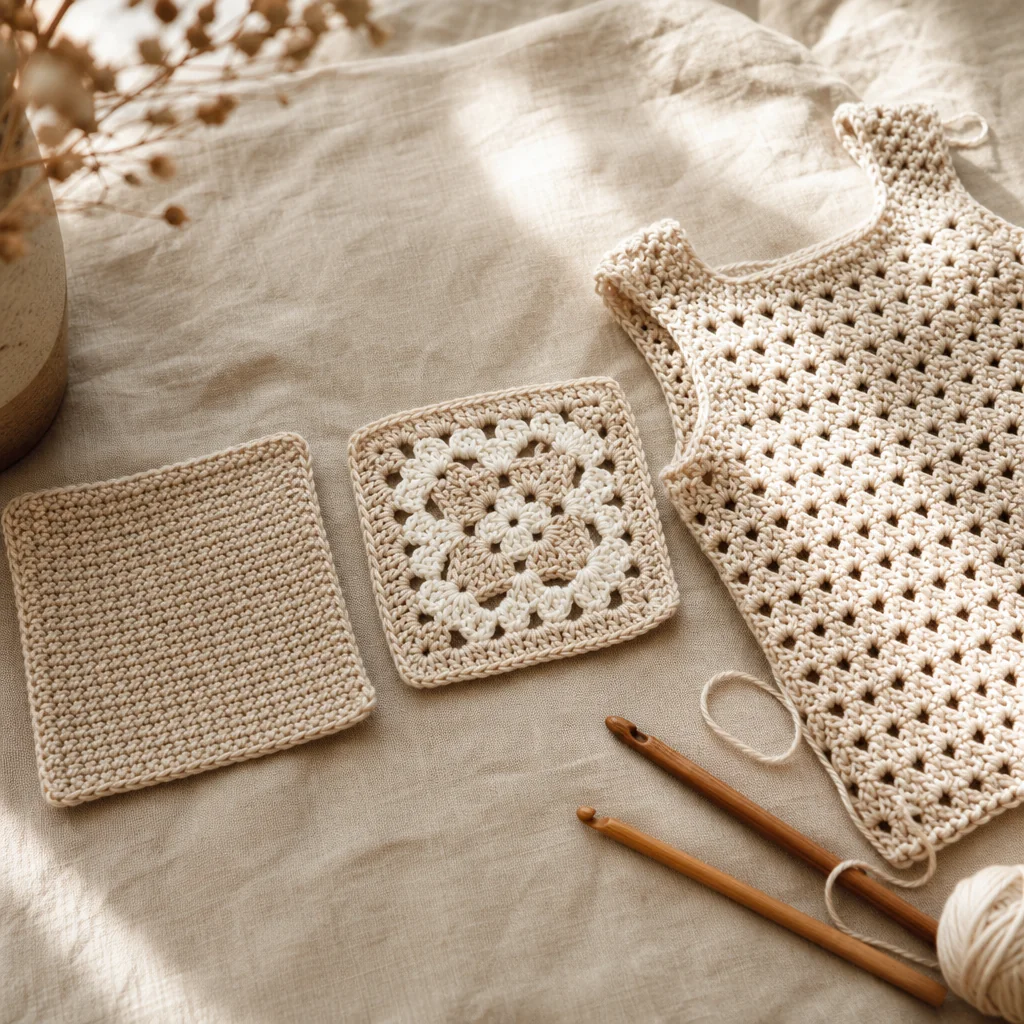
From Beginner to Designer: A Realistic Roadmap Through Crochets' Three Tiers
by Crochets Studio — Written by a Crochets.ca contributor who taught herself to crochet from library books and now can't walk past a yarn sale without stopping.
Crochets' three-tier system gives you a concrete path: Tier 1 builds core stitches and pattern-reading skills, Tier 2 adds shaping, colorwork, and garments, and Tier 3 teaches pattern writing and the business of design. Most crocheters move through all three over one to three years, at their own pace, with no pressure to rush.
Why a Tiered Roadmap Actually Helps
Most crochet burnout doesn't come from the craft itself, it comes from not knowing what to learn next. You finish a dishcloth, feel proud, then stare at a garment pattern full of unfamiliar abbreviations and freeze. A tiered system fixes that by telling you, plainly, what belongs to right now and what belongs to later.
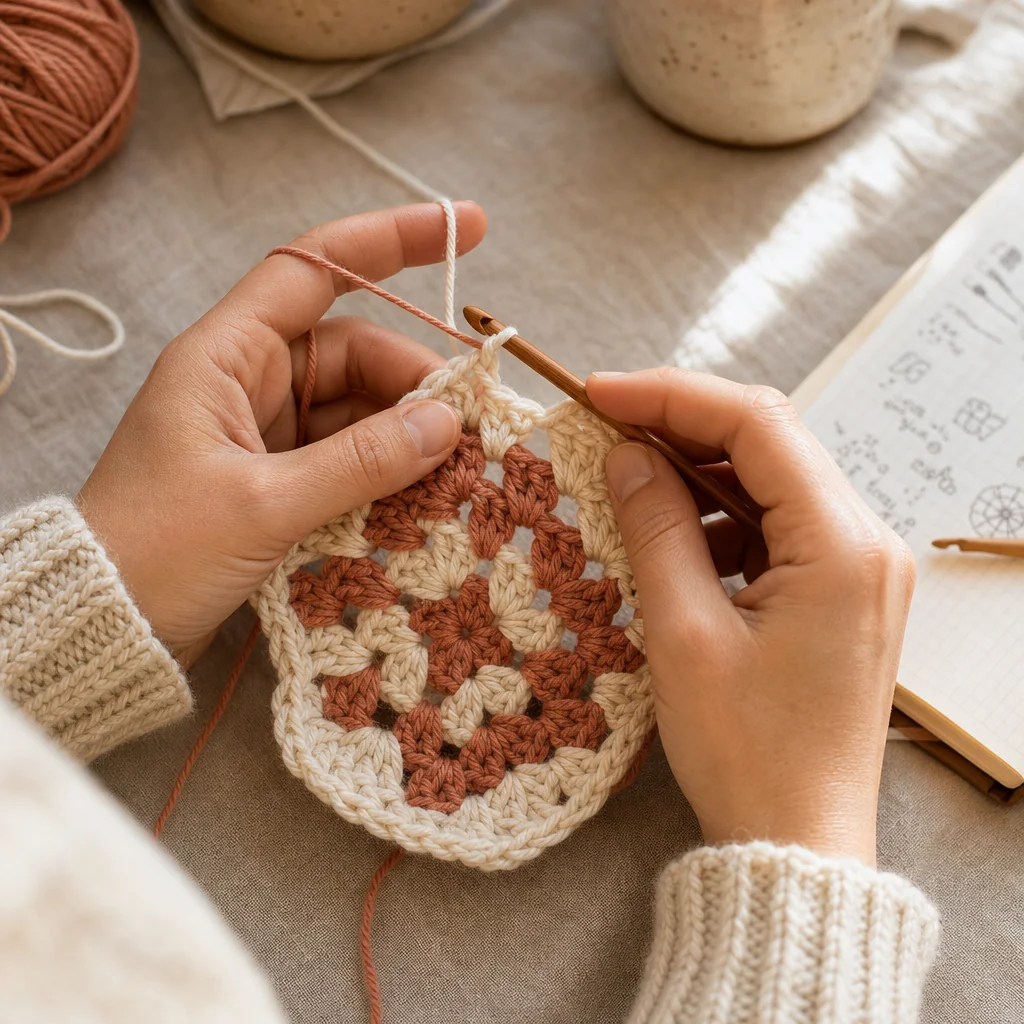
Crochets built its three tiers around how skills actually stack. Each one assumes the last is solid, and each one unlocks tools, patterns, and community spaces matched to where you're at. You're never stuck outgrowing content or drowning in techniques you're not ready for.
Tier 1: Building Your Foundation
What you're actually learning
Tier 1 is about muscle memory, not speed. Chain, single crochet, double crochet, half double, and basic increases and decreases. You're also learning to read a simple pattern without panicking, and understanding why gauge matters before it ruins a project.
What a realistic timeline looks like
Most people spend three to six months here, and that's with regular practice, not daily marathon sessions. Rushing this stage is the most common reason crocheters stall out later. Projects at this level: scarves, dishcloths, simple garter-style blankets, and your first granny square.
Signs you're ready to move up
You can follow a written pattern without checking a stitch dictionary every two lines, your tension is consistent row to row, and you've completed at least two or three full projects start to finish.
Tier 2: Expanding Your Skills
New techniques on the table
This tier is where crochet stops feeling like a set of instructions and starts feeling like a language. You'll learn shaping through increases and decreases in context, working in the round, basic colorwork, and texture stitches like bobbles, shells, and cables.
What you'll be making
Garments with actual fit requirements, amigurumi, and afghans with multiple stitch patterns combined. This is also when most people start swapping yarns, adjusting hook sizes, or tweaking a pattern's length, which is your first real step toward design thinking.
Developing your style
Tier 2 is less about mastering new stitches and more about making choices. Which colorways feel like you, which silhouettes you gravitate toward, which techniques you want to get faster at versus which ones you're happy to use occasionally.
Tier 3: Becoming a Designer
The technical side
Designing isn't just "knowing a lot of stitches." Tier 3 covers pattern writing conventions, grading a design across multiple sizes, and technical editing so your instructions actually make sense to someone who isn't you.
The business side
You'll also learn how to run a test group, price your patterns, and build a small portfolio. This is the part beginners rarely see coming: designing well and running a design business are two different skill sets, and Tier 3 treats both as essential.
Who this tier is for
Not everyone needs to reach Tier 3, and that's fine. Plenty of crocheters are perfectly happy living in Tier 2 forever, making beautiful things for themselves and their families. Tier 3 is for the ones who want their name on a pattern PDF.
Moving Between Tiers Without Guessing
There's no exam, no gatekeeping quiz. You move up when your projects and confidence say you're ready, and Crochets' learning path gives you checkpoints along the way so you're not guessing in the dark.
Ready to see where you land? Start the learning path to get matched to your tier, track your progress, and unlock the tutorials and patterns built for exactly where you are right now.
Next step
Start the learning path