How to Crochet a Scarf: 5 Patterns to Grow From Beginner to Advanced
by Crochets Studio — Written by a Crochets.ca contributor who has reknit the same scarf pattern in a dozen yarns just to see what happens, and still keeps a basket of half-finished ones by the couch.
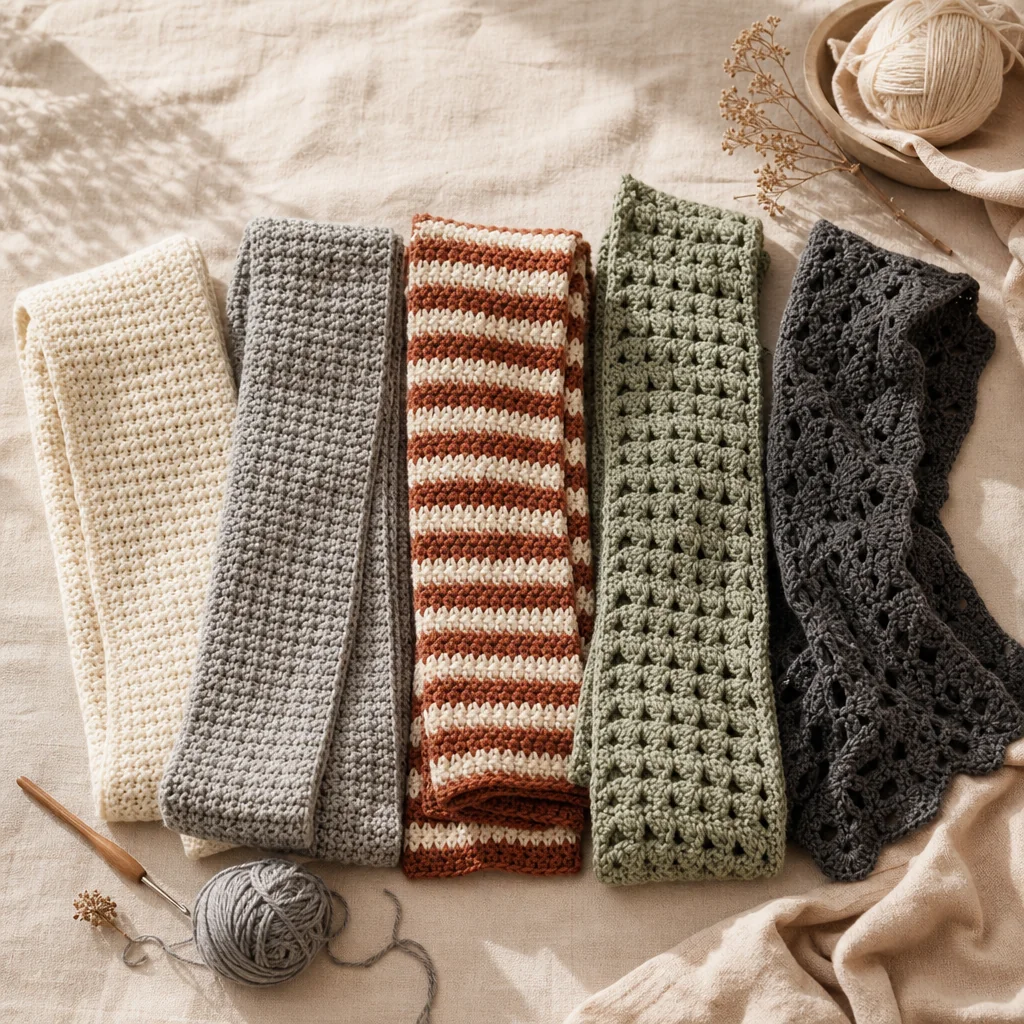
The fastest way to level up your crochet skills is to make the same project five different ways. Below, we compare five scarf patterns by stitch, difficulty, drape and finished look, so you can pick the right one for where you are now and know exactly what to try next.
Why a Scarf Is the Smartest Way to Level Up
A scarf is really just a rectangle worked in rows, which makes it the ideal canvas for testing new stitches without the pressure of shaping a garment. Because the five patterns below use the same basic shape, you can compare them side by side and see exactly how a stitch change affects density, drape and speed. Work through them in order, or jump to whichever one matches a technique you want to practice right now.
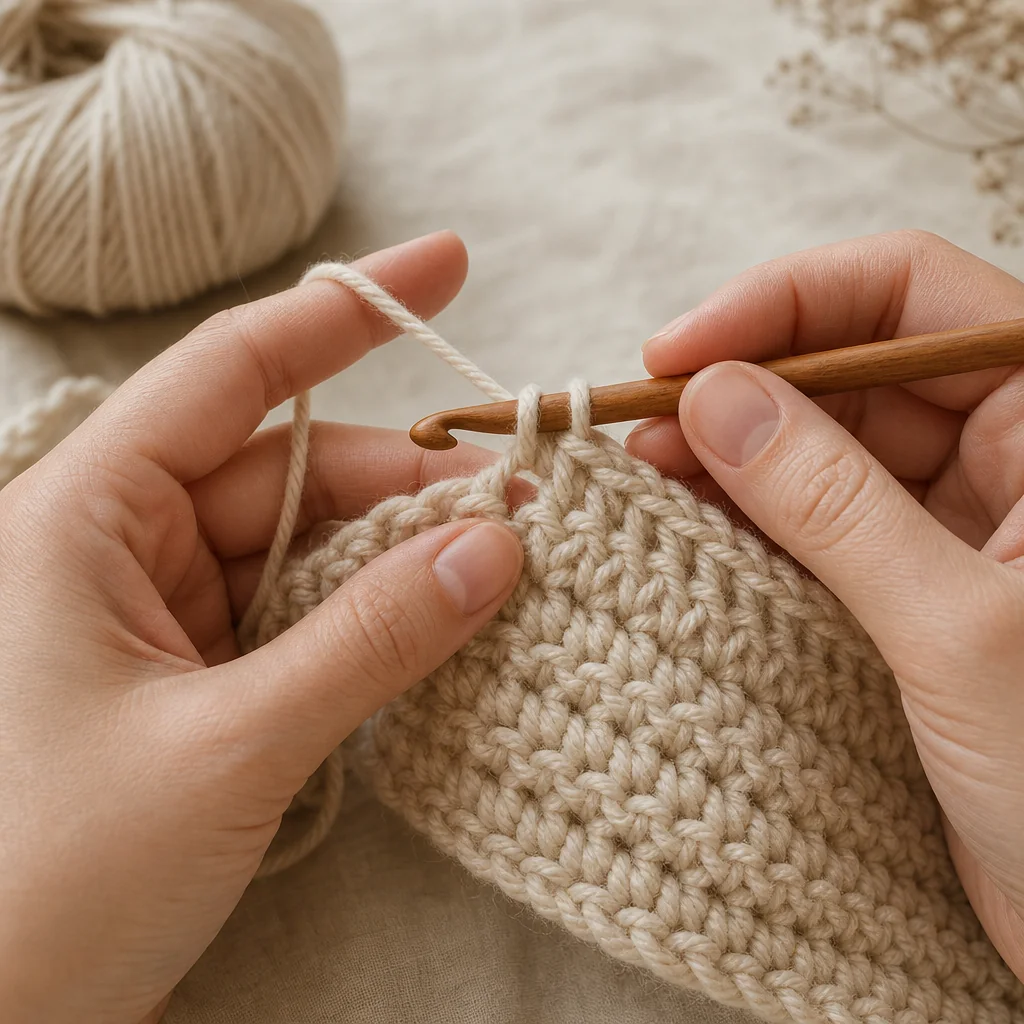
Before you start, grab a worsted weight (category 4) yarn and a 5mm (H/8) hook for any of these patterns, though the specific projects on our patterns library will list exact gauge and yardage.
1. Single Crochet Classic
Stitches & Technique
This scarf uses single crochet exclusively, worked in straight rows across a chain of 20-24 stitches (roughly 6-8 inches wide).
Skill Level
True beginner. If you can chain and single crochet, you can finish this scarf.
Why Make It
Single crochet creates a dense, tightly packed fabric with almost no gaps between stitches, which makes it the warmest option on this list. It's also the most forgiving stitch for keeping your edges straight, since every stitch is the same height and easy to count. The tradeoff is speed: single crochet is slow compared to taller stitches, so this scarf takes longer to grow. Choose this pattern if you want maximum warmth and want to build rock-solid tension before moving on.
2. Half Double Crochet Delight
Stitches & Technique
Swap single crochet for half double crochet, using the same basic setup: chain your width, then work rows of half double crochet to your desired length.
Skill Level
Beginner, ready for their second stitch.
Why Make It
Half double crochet is taller than single crochet, so rows build up faster and the fabric drapes a little more softly. The technique adds only one small step (yarn over before inserting your hook), so it's an easy jump if you've already mastered the classic version. This is the pattern to try when you want the same simplicity as pattern one, but a scarf that moves and folds more naturally around the neck.
3. Simple Stripes
Stitches & Technique
Use either single or half double crochet as your base stitch, then change yarn colour every two to four rows.
Skill Level
Beginner, working on finishing techniques.
Why Make It
Stripes don't require any new stitch, but they do teach you how to change colours cleanly, weave in extra ends, and plan a repeat. This is the pattern where you start thinking like a designer: how wide should each stripe be, and how many colours feel balanced? It's a low-risk way to practice colourwork planning before tackling anything with intarsia or tapestry crochet.
4. Granny Stripe Scarf
Stitches & Technique
Work clusters of double crochet stitches separated by chain spaces, stacking rows so the clusters nest into the gaps below, similar to a carré-tante pattern but worked in rows instead of rounds.
Skill Level
Early intermediate.
Why Make It
This is where the skill jump gets real. Double crochet is taller and faster to work than the stitches above, and reading a cluster-and-chain-space repeat teaches you to follow written patterns rather than just counting stitches one by one. The chain spaces also make the fabric airier and lighter, which is a nice contrast if you started with the dense single crochet version. Granny stripes are also endlessly colour-friendly, so this is a great pattern to combine with what you learned in the stripes project.
5. Lace-Look Scarf
Stitches & Technique
Alternate chains and double crochets in a simple repeating sequence (for example, skip a stitch, chain one, double crochet in the next) to build an open, lacy fabric.
Skill Level
Intermediate.
Why Make It
This pattern looks the most advanced on the list, but it only combines skills you've already practiced: chains, double crochet, and reading a repeat. The difference is that lace patterns demand more attention to stitch counts, since a missed chain space throws off the whole row. This is the project that bridges you toward reading full written patterns and, eventually, charts.
How to Choose Your Next Scarf
If you want warmth above all, start with the single crochet classic. If you want faster progress with the same effort, go half double crochet. If you're comfortable with your base stitch and want to build finishing skills, try stripes. Once double crochet feels natural, granny stripes will teach you pattern repeats, and the lace scarf will sharpen your stitch counting for more advanced projects ahead.
Tips for Success Across All Five
- Keep a consistent tension by checking your work every few rows against your starting chain width.
- Count your stitches at the end of every row for the first several rows of a new pattern until the repeat feels automatic.
- Block your finished scarf, especially the lace and granny stripe versions, to open up the stitch pattern and even out the drape.
- Save leftover yarn from each project. Stripe and colour-block scarves are the best way to use up partial skeins.
Ready to Pick Your Pattern?
Each of these five scarves teaches a specific skill you'll reuse in bigger projects, from garments to blankets. Browse the full step-by-step versions, with exact gauge, yardage and hook sizes, in our patterns library.