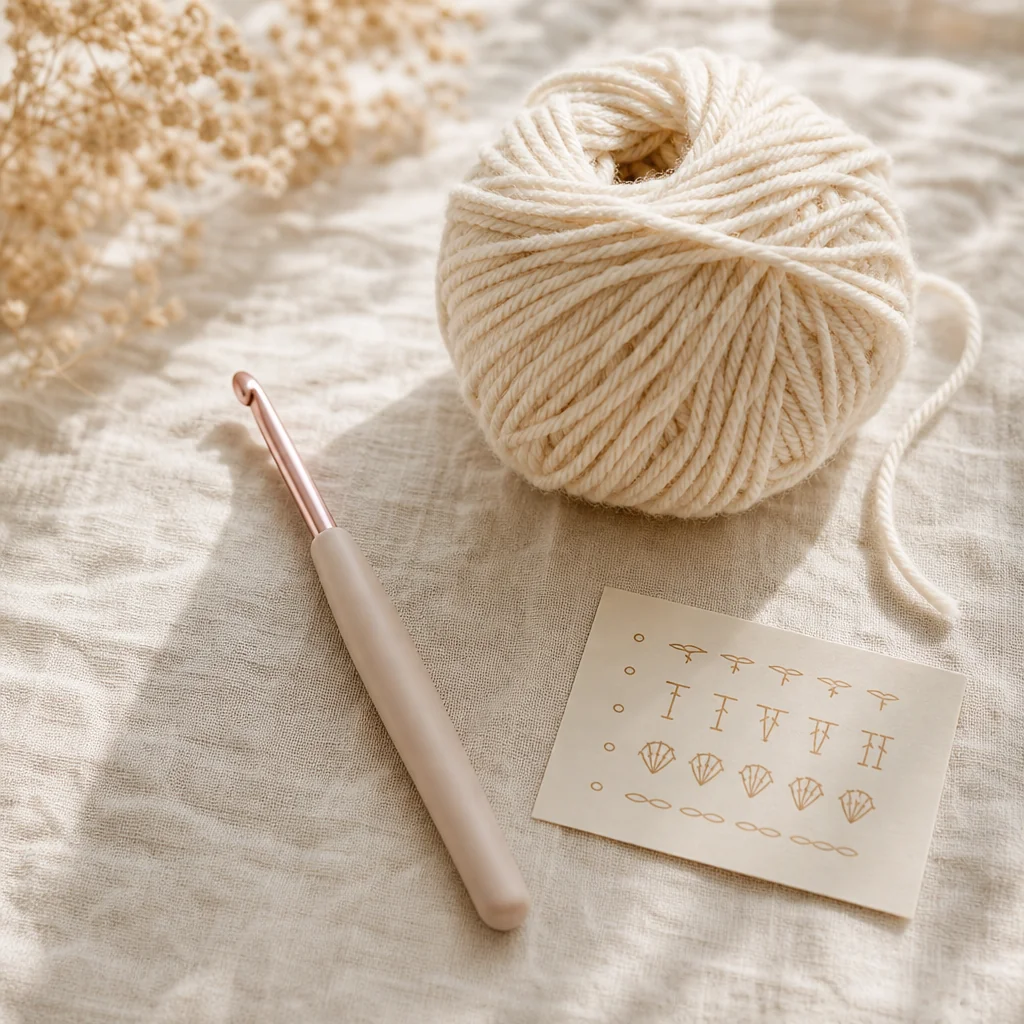
Choosing Your First Crochet Hook: A Beginner's Guide to Comfort and Control
by Crochets Studio — A fiber artist and crochet educator who's guided hundreds of people through their first stitches. When not creating, she's experimenting with new yarn blends and sharing the joy of handmade.
When you're starting your crochet journey, comfort and clarity matter far more than brand names or trendy materials. The right beginner hook—typically a medium size between 4.0mm and 5.5mm (US G to I)—will have an ergonomic grip, work smoothly with worsted-weight yarn, and let you see your stitches as you learn. Rather than investing in expensive sets, begin with one quality hook and build from there as you discover your personal preferences.
Why Hook Choice Matters More Than You Think
Choosing your first crochet hook might seem straightforward, but the wrong one can genuinely affect your learning experience. A hook that's uncomfortable to hold, too small to see your stitches clearly, or incompatible with beginner-friendly yarn can turn an exciting new hobby into a frustrating one. The good news? You don't need to spend a fortune to find a hook that works beautifully for you.
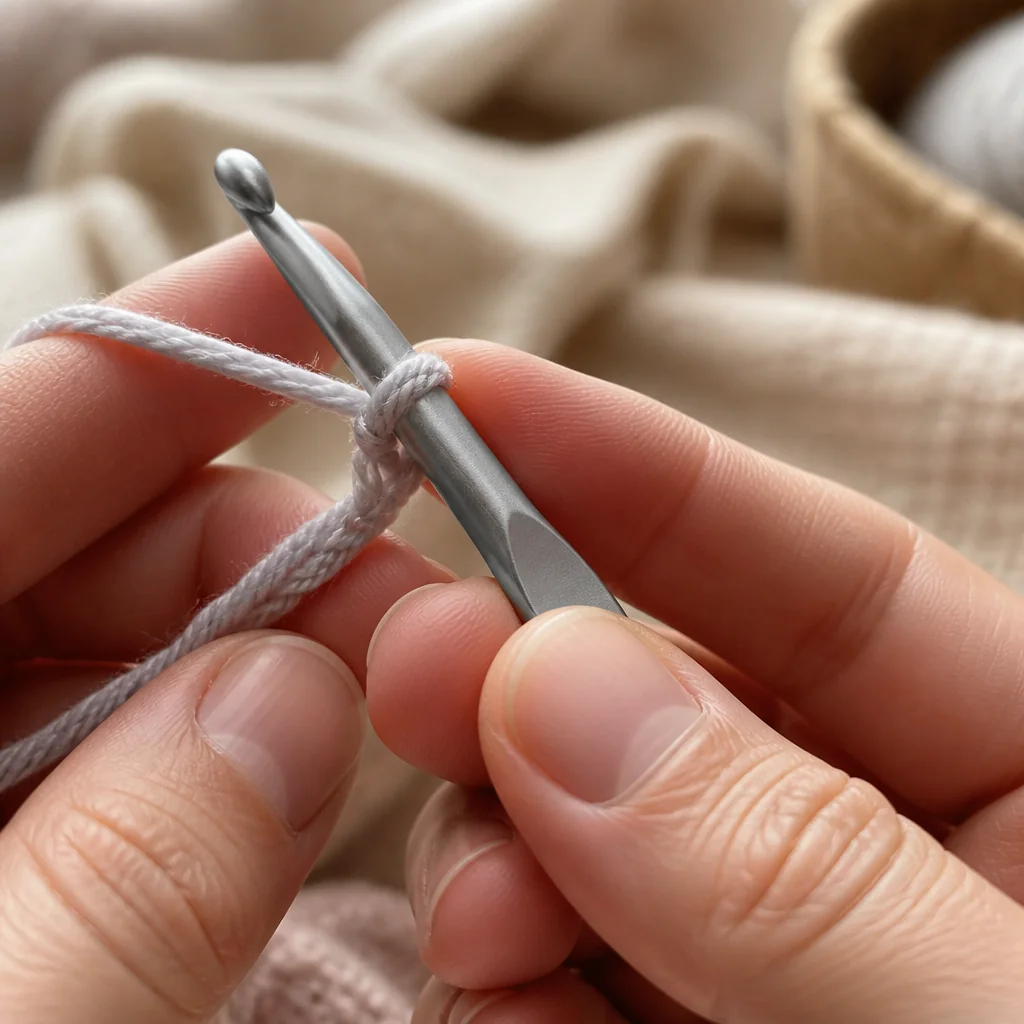
The best beginner hooks share a few key qualities: they're mid-sized, they have a shape that encourages consistent tension, and they feel good in your hand for extended periods. These fundamentals matter far more than whether your hook cost $2 or $20.
The Goldilocks Zone: Finding the Right Hook Size
Why Medium Matters
Hooks come in sizes ranging from tiny 0.6mm steel hooks (for delicate lace and thread) all the way up to 25mm+ jumbo hooks. For someone picking up crochet for the first time, this range can feel overwhelming. Here's the secret: most beginners should reach for a 4.0mm to 5.5mm hook, which translates to US sizes G through I.
Why this range? Several reasons work in your favor:
Visibility is your friend. With a medium-sized hook and appropriately weighted yarn, you can actually see your stitches. This is crucial when you're learning—spotting where your yarn went, understanding how stitches form, and catching mistakes early all become possible. Tiny hooks create tiny stitches that are hard to track with new eyes. Huge hooks create loose, open fabric that's equally confusing.
Yarn compatibility. Medium hooks pair beautifully with worsted-weight yarn (also called weight 4 or aran weight), which is the most forgiving yarn for learners. It's substantial enough that you can feel the tension in your work, thick enough that small mistakes don't instantly unravel, and widely available in every color imaginable.
Comfortable tension. Medium-sized hooks require a reasonable amount of hand strength and coordination, but not so much that your fingers fatigue within minutes. This sweet spot lets you practice long enough to build muscle memory without pain.
Specific Recommendations by Starting Goal
If you're planning to make blankets or wearables, start with a 5.0mm (US H-8) hook. It's right in the middle of the beginner range and works beautifully with standard worsted-weight yarn.
If you prefer working faster and seeing finished projects quickly, go slightly larger at 5.5mm (US I-9). The stitches move quicker, and the resulting fabric has a lovely drape.
If you like detailed work or have concerns about seeing small stitches, a 4.0mm (US G-6) is worth trying. It creates a denser, more defined fabric, though it does require slightly more precision.
Material: What Actually Makes a Difference
Aluminum Hooks
Aluminum is the workhorse of the hook world, and for good reason. These hooks are:
- Smooth and fast. Yarn glides across aluminum surfaces beautifully, which means less resistance and faster stitching. This is especially nice when you're still developing an efficient rhythm.
- Affordable. Quality aluminum hooks cost very little, often $1-3 per hook, so you can afford to experiment without guilt.
- Lightweight. They won't tire out your hand during longer crochet sessions.
- Consistent. Manufacturing is standardized, so you know exactly what you're getting regardless of brand.
The only potential downside? Some people find aluminum hooks a bit too slippery, causing yarn to slide off the hook tip occasionally. If this happens to you, a wooden hook might be your answer.
Wooden Hooks
Wooden hooks (typically bamboo or hardwood) offer a different experience:
- Better grip. The slightly rougher surface of wood creates natural friction with yarn, so stitches are less likely to slip off. This can be incredibly reassuring for nervous beginners.
- Warmth. There's something psychologically comforting about holding wood. Many crocheters find them more pleasant over long sessions.
- Quieter. If you crochet in shared spaces, wooden hooks make significantly less noise than aluminum.
- Personality. Wooden hooks often come in beautiful finishes and colors, which makes your tools feel special.
Wooden hooks do tend to cost more ($3-8 per hook) and wear over time if used heavily, but many crocheters find they're worth it.
Plastic and Acrylic Hooks
These are budget-friendly and fine for casual practice, but they often catch on yarn and create friction that slows you down. They're okay for trying out crochet, but upgrading to aluminum or wood fairly quickly will improve your experience significantly.
Hook Shape: Inline vs. Tapered
Inline Hooks
Inline hooks have a straight, slightly pointed head with a uniform thickness. The eye (the indented part where you catch yarn) is essentially the same width as the shaft below it.
Why beginners often prefer inline hooks:
- The consistent width makes it easier to insert your hook into stitches accurately.
- The pointed tip is forgiving when you're still learning where exactly to place your hook.
- Many crocheters find inline hooks create more even, consistent stitches.
Tapered Hooks
Tapered hooks have a more rounded, bulbous head that transitions down to a thinner shaft. The eye is noticeably wider than the shaft.
The tapered advantage:
- Some people find the rounder head more comfortable in their hand.
- The wider eye can make catching loose yarn easier, especially when working with slippery yarns.
- They can feel slightly more ergonomic if you have larger hands.
Honest truth: Once you've tried both, you'll develop a preference, but it's rarely about one being objectively "better." It's personal preference. Many beginners find inline hooks slightly easier at first, so starting there makes sense. You can always experiment later.
The Handle: Ergonomics You Actually Feel
Pay attention to how the hook feels in your hand during those first few sessions. A hook that forces your hand into an uncomfortable angle or requires you to grip too tightly will leave your hand sore and tired.
What to Look For
Slight flattening or texture. A truly cylindrical hook can roll in your hand when you get tired. A subtle flattened area or textured coating gives you an instinctive "anchor point" so you don't have to think about grip.
Not too thin, not too thick. If the shaft is extremely thin (like a pencil), it will cut into your fingers during extended work. If it's very thick, it becomes tiring to hold. A comfortable diameter is roughly equivalent to a standard pencil to a thick marker—thick enough to grip without pain, thin enough to move smoothly through your work.
Weight balance. Pick it up. If it feels heavy or bottom-heavy, it'll tire your hand faster. You want something that feels almost weightless, like an extension of your hand.
Building Your Starter Kit: Less Is More
One of the biggest mistakes beginner crocheters make is buying a large assorted set of hooks all at once. These sets include sizes you'll rarely use, hooks made from various materials (so nothing feels consistent), and often cheaper construction that catches on yarn.
What You Actually Need
Start with:
- One quality 5.0mm (H-8) hook in either aluminum or wood, whichever appeals to you more. This is your main practice tool.
- One ball of light-colored worsted-weight yarn. White, cream, pale yellow, or light gray are ideal. Dark colors and variegated patterns make it genuinely difficult to see the structure of your stitches. Acrylic yarn is fine—it's affordable, forgiving, and widely available.
That's it. That's your complete starter kit.
When to Expand
Once you've completed a few small projects and are comfortable with basic stitches (chain, single crochet, double crochet), then start exploring other hook sizes. If you find yourself reaching for a smaller or larger hook because your instincts say so, that's the time to buy. You'll know what you need because you'll have felt what doesn't work.
Testing Before You Buy
If you have access to a local yarn shop, ask if you can hold different hooks to feel the difference between inline and tapered, aluminum and wood. Five minutes of hands-on comparison teaches you more than reading specifications.
If you're ordering online, many shops offer hook variety packs at reasonable prices. Invest in a small set of three different styles ($8-15 total), try each one, and donate or gift the others. This is far smarter than committing to one expensive set based on assumptions.
The Real Beginner Secret
Here's what experienced crocheters know: hook preference is incredibly personal, and it shifts as you evolve. The best beginner hook is the one that feels comfortable in your hand, lets you see your stitches clearly, and encourages you to keep practicing. That might be a $2 aluminum hook or a $7 bamboo hook. The price tag matters far less than the fit.
Give yourself permission to prioritize comfort and clarity over prestige. Start simple, stay consistent, and let your preferences develop naturally as you discover what you love about crochet.
Next step
Explore Our Beginner Hook Collection