My Hands Hurt When I Crochet — What's Actually Wrong?
by Crochets Studio — A fiber artist who learned the hard way that hand health matters as much as perfect tension, now dedicated to helping crocheters build sustainable, pain-free practices that last a lifetime.
Crochet hand pain isn't something you have to accept—it's a signal that your grip, posture, tools, or pacing need adjustment. Most discomfort comes from gripping too tightly, using hooks that don't fit your hand, or crocheting too long without breaks. With small changes to your technique and workspace, you can stitch comfortably and avoid long-term strain.
Why Your Hands Hurt When You Crochet
Hand pain while crocheting isn't a badge of dedication—it's your body warning you that something's off. Whether you're experiencing soreness in your fingers, aching wrists, or tension through your forearms, these signals tell you it's time to evaluate your technique, tools, and habits. The good news? Most crochet-related pain is preventable once you know what's causing it.
The Death Grip: Tension Problems
The most common culprit behind crochet pain is how tightly you're holding your hook and yarn. Many crocheters, especially beginners or those working on complex patterns, unconsciously squeeze their tools in concentration. This constant tension exhausts the small muscles in your hands and restricts blood flow.
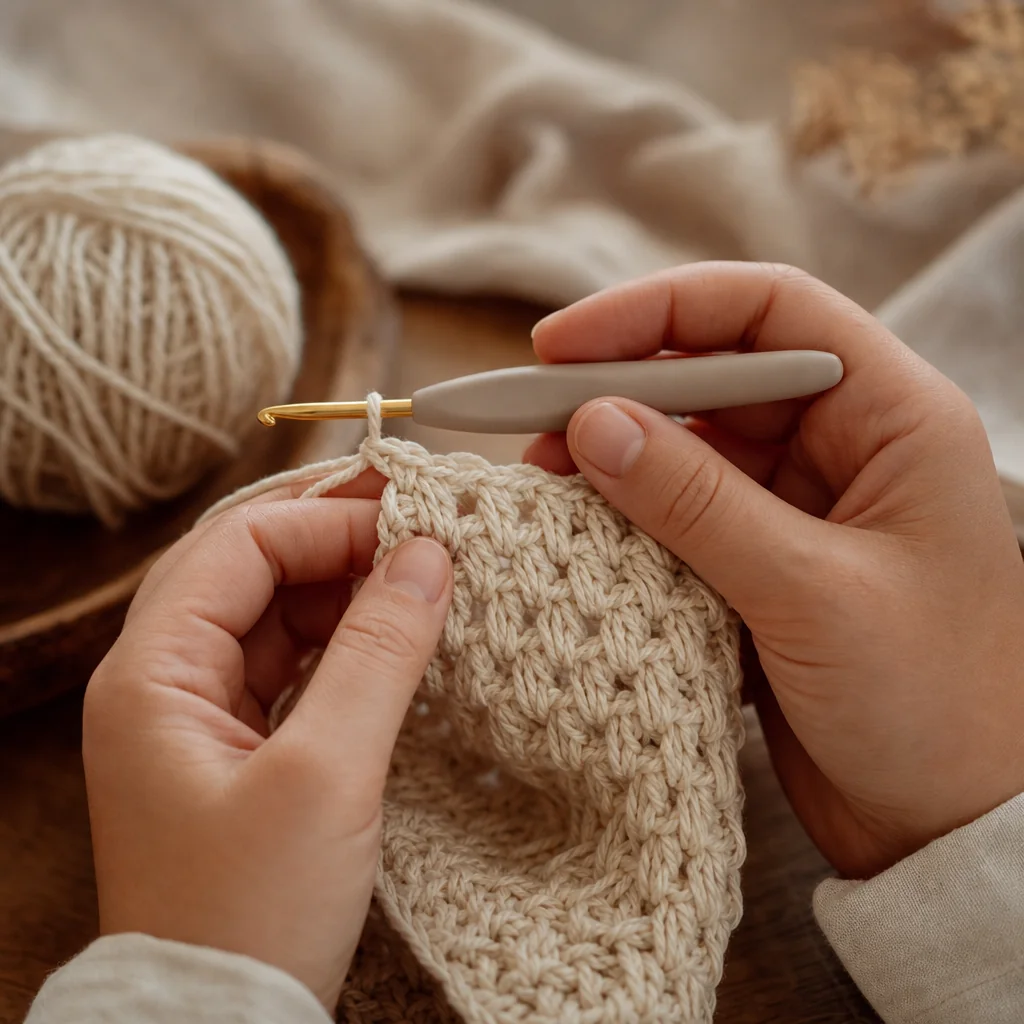
Your hook should rest lightly in your dominant hand—whether you use a knife hold or pencil grip, your fingers shouldn't feel clenched. The yarn feeding through your non-dominant hand should flow smoothly with gentle guidance, not be strangled between white-knuckled fingers. If you notice your hands cramping after just a few rows, tension is likely the problem.
To retrain your grip, pause every few stitches and consciously relax your hands. Let your hook rest in your palm's natural curve. The yarn should maintain consistent tension through finger positioning, not through force. It feels awkward at first, but a relaxed grip becomes automatic with practice.
Your Hook Might Be Fighting You
Not all crochet hooks are created equal, and using the wrong hook for your hand can cause serious discomfort. Slim metal hooks under 3.5mm require precise control and force your fingers into cramped positions. After extended use, this precision work strains the small muscles and tendons in your hands.
Ergonomic hooks with wider, cushioned handles distribute pressure across your palm instead of concentrating it on your fingertips. The larger grip requires less force to control, and soft materials like rubber or silicone absorb some of the repetitive impact. If you frequently work with fine yarn and small hooks, investing in ergonomic versions of your most-used sizes makes an immediate difference.
Hook material matters too. Aluminum hooks can feel cold and slippery, causing you to grip harder for control. Bamboo and wood hooks offer natural warmth and friction, while acrylic hooks with textured grips prevent slipping without extra pressure. Experiment with different materials—what feels comfortable is the right choice for your hands.
Posture Is Sneakier Than You Think
Your hands hurt, so you assume the problem is in your hands. But often, hand pain starts in your posture. Hunching over your work creates a chain of tension: your shoulders round forward, your neck bends down, your elbows lift away from your body, and your wrists bend at awkward angles to compensate. All that misalignment funnels stress into your hands.
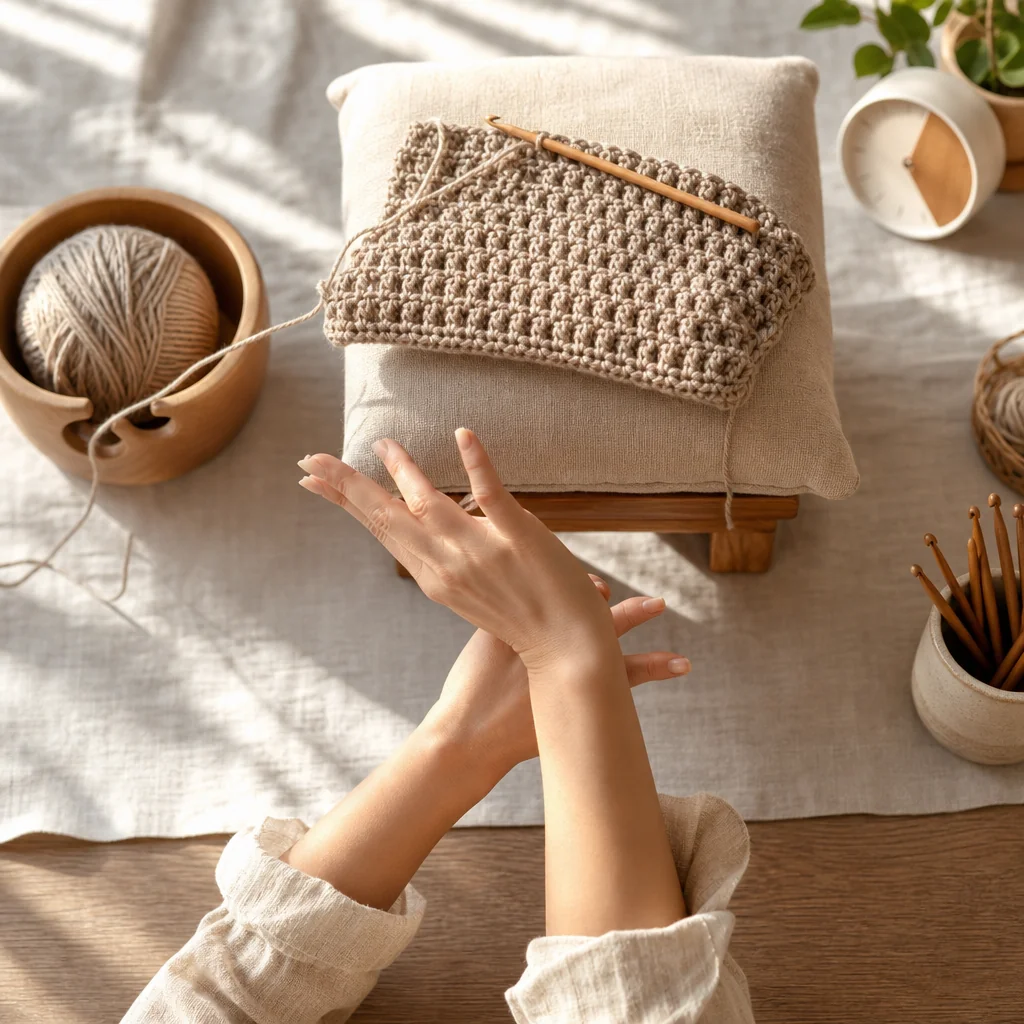
Sit with solid back support—a chair with lumbar support or a cushion behind your lower back keeps your spine aligned. Bring your work up to eye level instead of dropping your head down to your work. Use a pillow on your lap to raise your project, or prop your elbows on armrests. Your elbows should stay close to your body and relaxed, not hovering in the air.
Your wrists should remain as straight as possible. If you notice your wrists bending sharply up or down as you stitch, adjust your position or try a different hold. Even small adjustments to posture reduce the cumulative strain that shows up as hand pain after a long session.
You're Ignoring Your Body's Timer
Crochet is meditative, and it's easy to lose track of time. But repetitive motion without rest causes inflammation and fatigue in tendons and muscles. Your hands need breaks to recover, especially if you're working on tight gauge or intricate stitches.
Set a timer for 30-45 minutes. When it goes off, put down your hook for 5-10 minutes. Shake out your hands, stretch your fingers wide, then make gentle fists. Roll your wrists in circles. Reach your arms overhead and let your shoulders drop away from your ears. These micro-breaks prevent the deep ache that sets in after hours of non-stop stitching.
If you're in the middle of a complex pattern section and don't want to lose your place, at least pause between rows. Use that moment to stretch and breathe before diving back in. Your project will still be there—your hand health might not be if you ignore these warnings.
When Pain Means Something Serious
Most crochet discomfort responds to technique adjustments and breaks. But certain types of pain signal underlying issues that need medical attention. Sharp, shooting pain, numbness, or tingling in your fingers—especially your thumb, index, and middle fingers—can indicate carpal tunnel syndrome. This happens when the median nerve gets compressed in your wrist, often from repetitive motion and poor wrist positioning.
Persistent pain in your thumb joint, difficulty gripping, or a grinding sensation might point to thumb arthritis, which repetitive pinching motions can aggravate. Tendonitis—inflammation of the tendons—causes pain that worsens with movement and doesn't improve with rest.
If you experience any of these symptoms, or if pain continues after you've adjusted your technique and taken breaks, see a healthcare provider. Early intervention prevents minor issues from becoming chronic conditions. A physical therapist who works with repetitive strain injuries can teach you specific exercises and modifications.
Quick Fixes to Try Right Now
Before you start your next project, spend two minutes stretching. Extend one arm forward with your palm up, then gently pull your fingers back toward your body with your other hand. Hold for 15 seconds, then flip your palm down and pull your fingers down. Repeat on the other side. Roll your shoulders back, stretch your neck side to side, and shake out your hands.
Consider wrist supports or compression gloves if you have chronic discomfort. These provide gentle support without restricting movement. Some crocheters find them helpful for longer sessions, though they're not a substitute for proper technique.
When your hands need a break from fine work, switch to larger projects with bulky yarn and bigger hooks. The looser gauge and larger motions give your small muscles a rest while still letting you crochet. Keep a chunky blanket or oversized scarf project on hand for recovery days.
Heat helps soothe sore muscles. A warm compress or paraffin wax treatment before crocheting loosens stiff joints. Cold packs after a long session reduce inflammation. Alternate between them if you're dealing with both pain and swelling.
Most importantly, listen to your body. Discomfort is information, not a challenge to push through. Adjust, rest, and modify before pain becomes injury. Sustainable crocheting means you'll still be stitching decades from now—pacing yourself now protects that future.
Building Long-Term Comfort
Preventing hand pain is easier than fixing it. Build good habits from the start: maintain relaxed tension, use appropriate tools, sit with proper support, and take regular breaks. Pay attention to what your hands tell you. A little soreness after trying a new stitch is normal. Persistent pain that returns every session is not.
Track patterns with your pain. Does a particular stitch hurt more? Do certain yarns cause cramping? Is there a time of day when your hands feel better? This information helps you make informed choices about projects and timing.
Your crochet practice should bring joy and relaxation, not chronic pain. With awareness and small adjustments, you can create beautiful work while keeping your hands healthy and happy for years of stitching ahead.
Next step
Explore beginner-friendly techniques