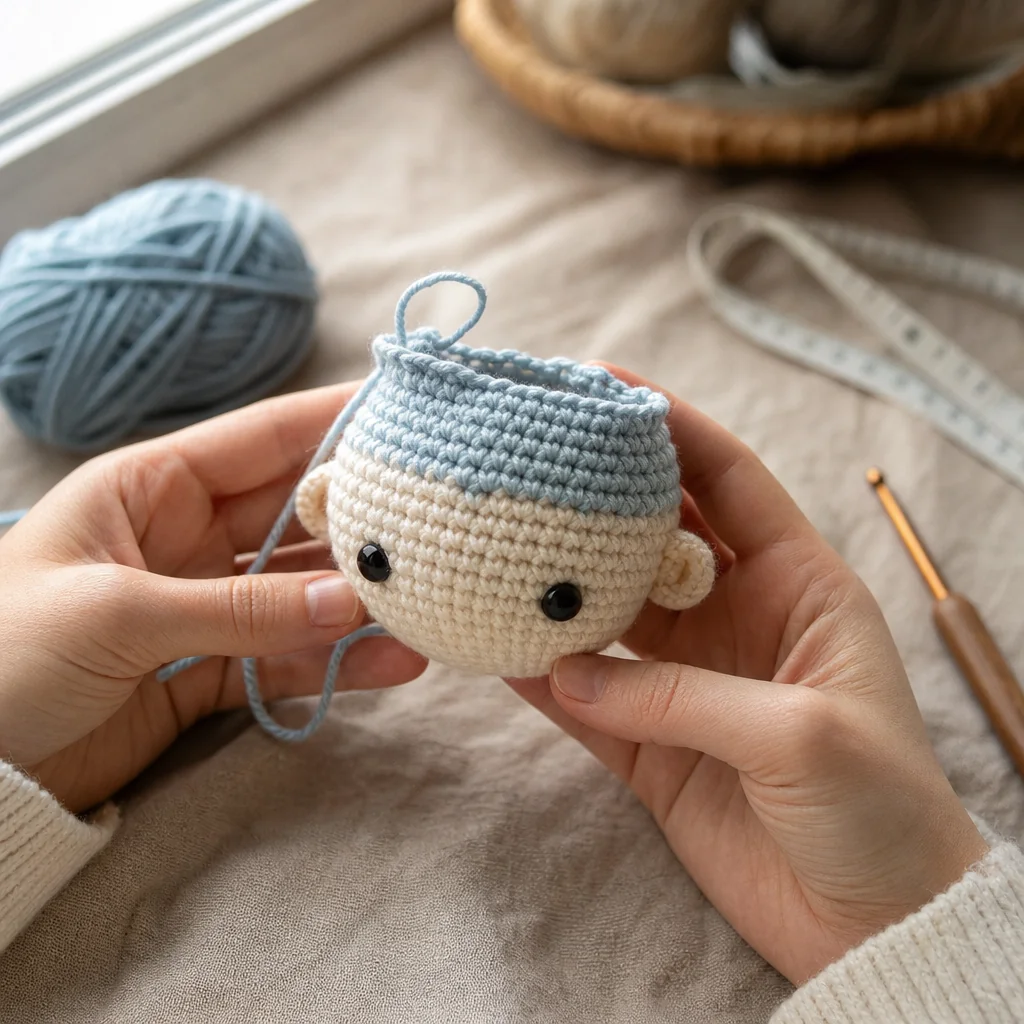
Why Is My Amigurumi Head Wobbly or Lopsided?
by Crochets Studio — Written by a Crochets.ca contributor who has frogged more amigurumi heads than she'd like to admit, mostly over Sunday morning coffee.
A wobbly or lopsided amigurumi head almost always traces back to one of four culprits: uneven tension, stuffing that's unevenly packed, a miscounted decrease round, or a neck seam that isn't anchored well enough. Figure out which one you're dealing with and the fix is usually a five-minute job, not a full restart.
Common Causes and Fixes
Amigurumi heads are basically small, stuffed spheres held up by tight single crochet fabric, so any weak point shows up fast. Here are the four most common reasons a head ends up wobbly or lopsided, and what actually fixes each one.
Inconsistent Tension
The problem: the head looks slightly deflated on one side, or the stitches look uneven when you turn the piece in your hand.
The cause: your grip on the hook or yarn changes slightly from stitch to stitch. A few looser stitches next to a cluster of tighter ones creates soft spots that give way once stuffing pushes against them from the inside.
The fix: amigurumi is one of the few crochet projects where you want your tension tighter and more consistent than usual, not looser. Practice holding your yarn the same way for an entire round before moving to the next, and check your fabric under light: gaps between stitches usually mean the tension is too loose for the yarn weight you're using.
Improper Stuffing
The problem: the head feels soft in one spot and firm in another, or it's stretched thin enough that the polyfill shows through.
The cause: stuffing added in one or two big handfuls instead of small amounts, or stuffing pushed toward the top before the bottom is filled.
The fix: add stuffing in small pinches, working from the bottom of the piece upward, and pause every few pinches to press gently and check for hollow spots. The head should feel firm and round, like a stress ball, not hard as a rock and not squishy enough to dent and stay dented.
Uneven Decreases
The problem: one side of the head is noticeably flatter, or the shaping looks like it's spiraling instead of forming a smooth curve.
The cause: a skipped or extra stitch during a decrease round throws off the stitch count, and every round after that inherits the mistake.
The fix: count your stitches at the end of every round, especially decrease rounds, before moving on. If a round is off, it's much easier to rip back three or four stitches right away than to discover the problem ten rounds later. A stitch marker on the first stitch of each round makes this a five-second check instead of a guessing game.
Weak Neck Attachment
The problem: the head itself looks fine, but it tips to one side or rotates loosely on the body.
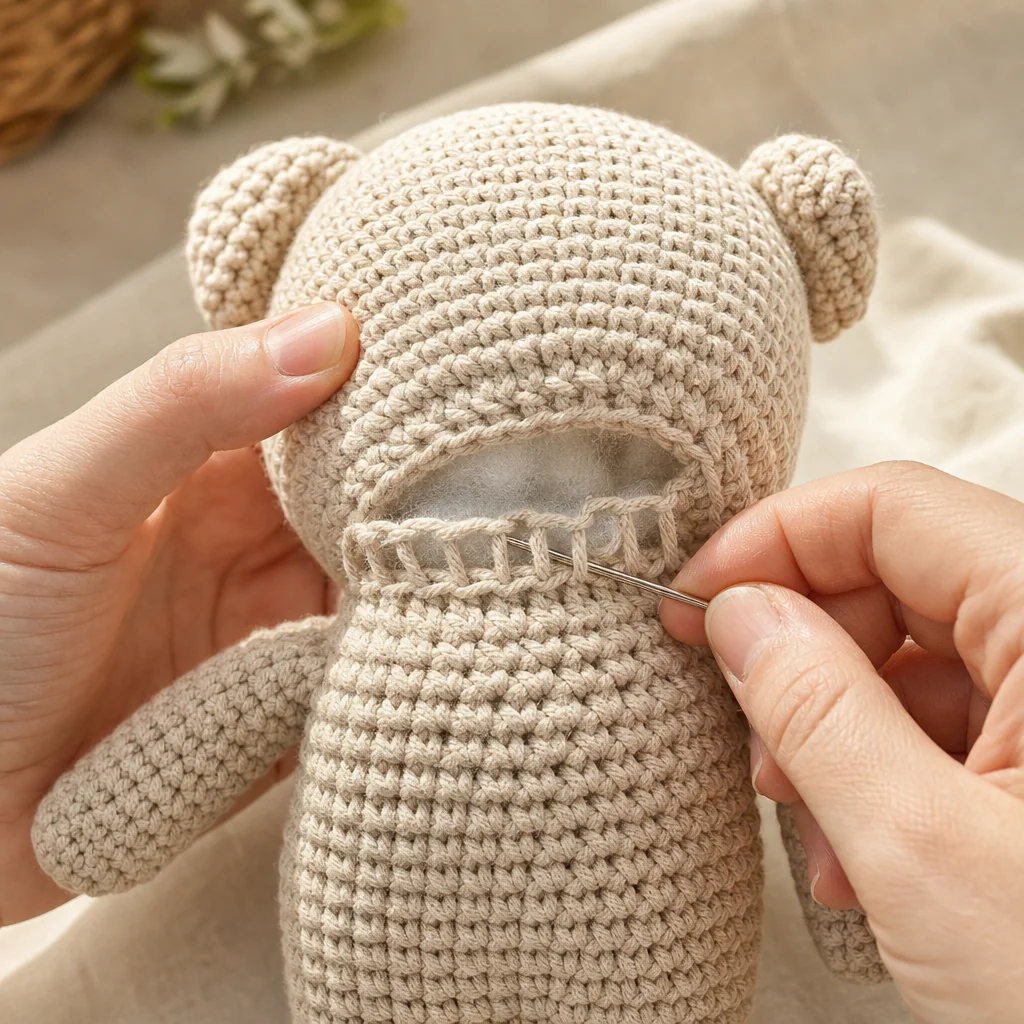
The cause: the head is only tacked on with a few stitches, or it's attached through the outer loops only instead of catching sturdy fabric on both pieces.
The fix: use a strong sewing thread or a doubled strand of the same yarn, and sew through several stitches on both the head and the body, going around the attachment point at least twice. Pull just tight enough to remove slack without puckering the fabric.
Quick Fixes for a Head You've Already Finished
If the head is already sewn on and something still looks off, try these before deciding to redo the whole piece:
- Gently massage the head to redistribute stuffing that's clumped on one side
- Use a chopstick or knitting needle to push small amounts of stuffing into hollow spots without unpicking anything
- Pin the piece into the shape you want and lightly steam it, then let it cool completely before unpinning; this can relax stitches enough to even out minor lopsidedness
- For a more serious lean, carefully open a section of the neck seam, adjust or add stuffing, then re-sew with a stronger attachment than before
Prevention: Building Habits That Stop Wobble Before It Starts
Go Down a Hook Size
Using a hook one size smaller than the yarn label recommends is the single biggest habit change for amigurumi. It tightens the fabric, closes gaps between stitches, and keeps stuffing from peeking through, which also makes tension mistakes far less visible.
Count Every Round, Not Just the Tricky Ones
It's tempting to only count stitches during increase and decrease rounds, but a stray stitch can sneak into a plain round too. Counting every round takes a few extra seconds and saves you from ripping back later.
Treat the Neck Seam Like a Structural Joint
The neck attachment is holding up the weight of a stuffed head, so it needs to be treated like a joint, not a decoration. Two full passes around the attachment point with a strong thread will outlast a cute-but-flimsy whip stitch every time.
Most wobbly heads are fixable without starting over, and the same four checks (tension, stuffing, decreases, neck) will catch almost every case. Once you've fixed the current piece, the real win is building the habits above into your next project so you're troubleshooting less and crocheting more.
Next Step
Want to lock in tighter, more even tension before your next amigurumi project? Head over to Crochets.ca's Stitch Studio to practice consistent stitch height and tension with guided drills before you pick up your hook again.