Sustainable and Zero-Waste Crochet: Using Every Scrap
by Crochets Studio — Written by a Crochets.ca contributor who has never once thrown out a yarn tail longer than an inch and has the overflowing scrap basket to prove it.
Zero-waste crochet means treating every leftover strand as a resource instead of garbage. With a scrap basket, a couple of joining techniques, and smart sorting, you can stretch your yarn budget and keep almost nothing out of your finished pieces.
Build a Scrap Basket System
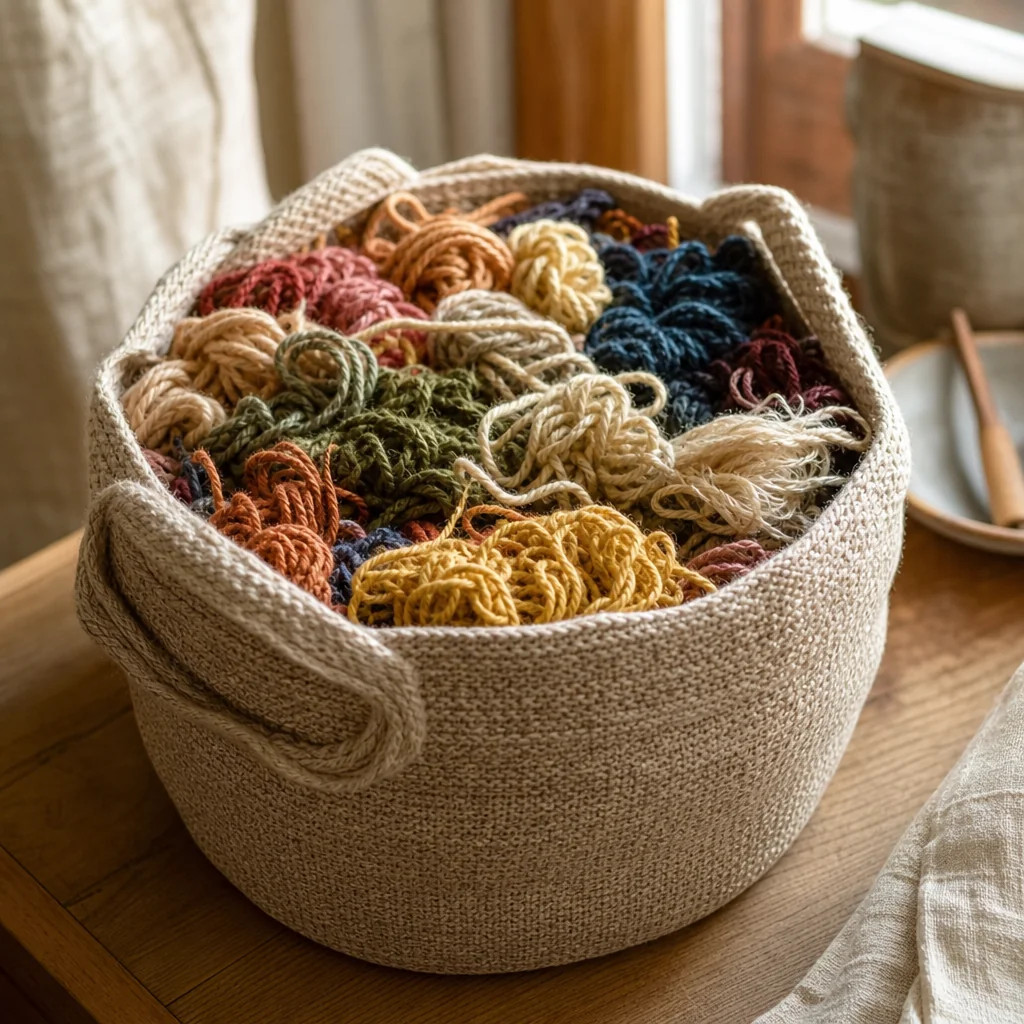
The simplest way to start is to stop throwing anything out. Keep a dedicated basket, bin, or bag just for leftover yarn, and toss every end piece in there the moment you finish a project. Once it's full, you'll have a ready-made stash for granny square blankets, striped dishcloths, or scrappy amigurumi, no dedicated shopping trip required.
The trick is making this basket visible, not buried in a closet. If you see it every time you sit down to crochet, you'll actually reach for it instead of cutting into a fresh skein out of habit.
Join-As-You-Go: Skip the Weaving, Save the Waste
One of the biggest sources of "wasted" yarn isn't the scraps themselves, it's the tails you cut off after weaving in ends. Join-as-you-go methods let you connect motifs while you work, using those tail ends productively instead of trimming them away.
Flat Join
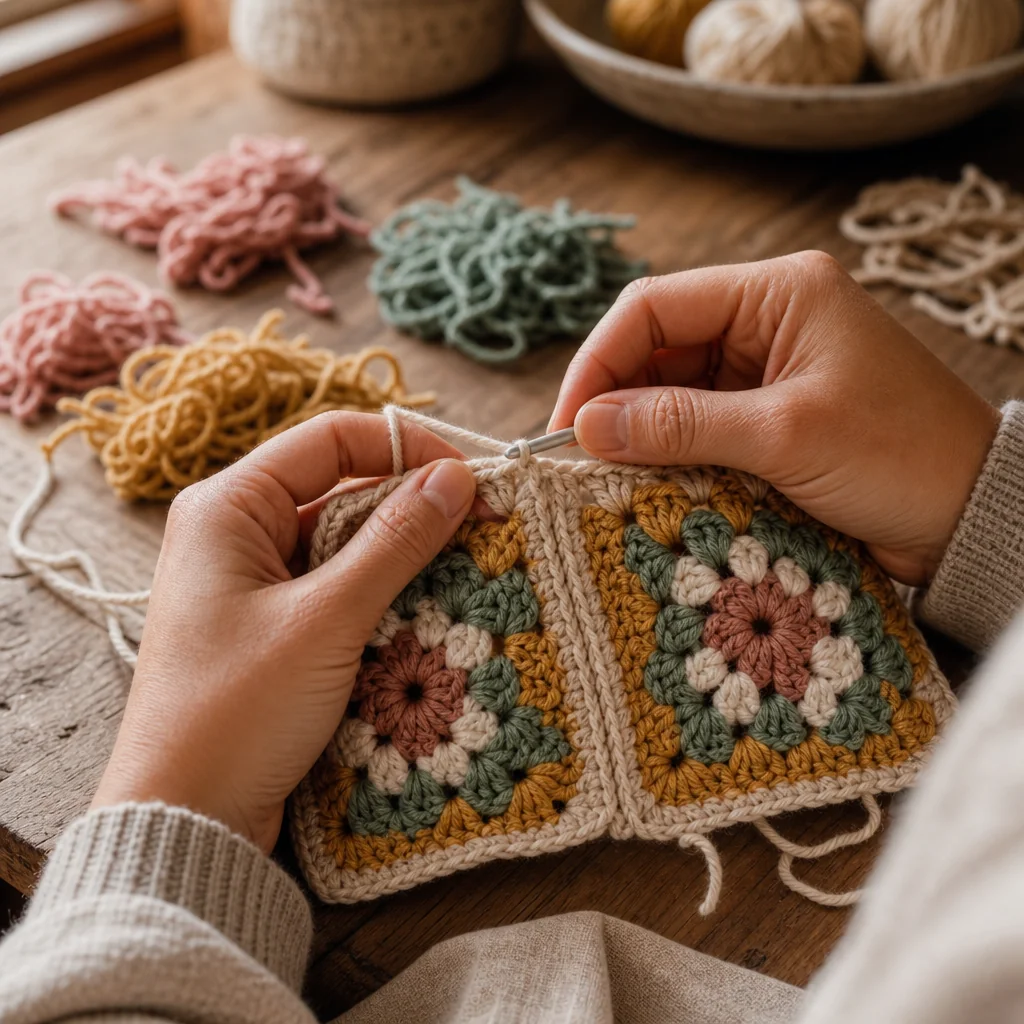
The flat join connects two motifs with a single crochet or slip stitch right as you finish the last round, keeping the seam low-profile and nearly invisible from the right side. It's ideal for blankets where you want a soft, flexible join.
Zipper Join
The zipper join weaves the last stitches of two motifs together in a way that mimics a knit bind-off, creating a nearly seamless line. It takes a bit more practice but is worth learning if you make a lot of granny square projects.
Both techniques mean fewer ends to weave in later, which means less yarn trimmed off and thrown away.
Tiny Scraps, Big Payoff
Don't underestimate what a 10-yard piece can do. Small scraps are perfect for bookmarks, appliqués, gift tags, and amigurumi stuffing. Cotton scraps make great face scrubbies or coasters, and even the shortest bits can be chopped up and used as stuffing filler instead of buying polyester fiberfill.
If a scrap feels too short to be useful, ask what it's long enough for rather than assuming it's garbage. Most projects need less yarn than you think.
Sort by Weight and Color First
A basket of tangled, mixed scraps is discouraging to dig through, so the payoff of quick sorting is huge. Group your leftovers by yarn weight first (worsted, DK, sport, and so on), then by color family within each group. When you're ready to start a scrappy project, you can grab a coordinated handful in seconds instead of untangling a chaotic pile.
Let Go of Perfect Matching
Scrap projects work best when you stop trying to force a matching palette. Some of the most memorable finished pieces come from unplanned color combinations that wouldn't have made it past a curated shopping list. Let the scraps decide the palette, and treat mismatches as part of the design rather than a flaw to fix.
The Real Win: Your Wallet and the Planet
Zero-waste crochet isn't just about being eco-conscious, though that matters. It's also one of the most budget-friendly habits a crocheter can build, since every scrap used is one less skein you need to buy. More than that, working with leftovers pushes you toward looser, more playful decisions than a brand-new project usually allows. Those scraps in your basket aren't a problem waiting to be solved. They're a project waiting to happen.
Next step
Browse scrap-friendly patterns