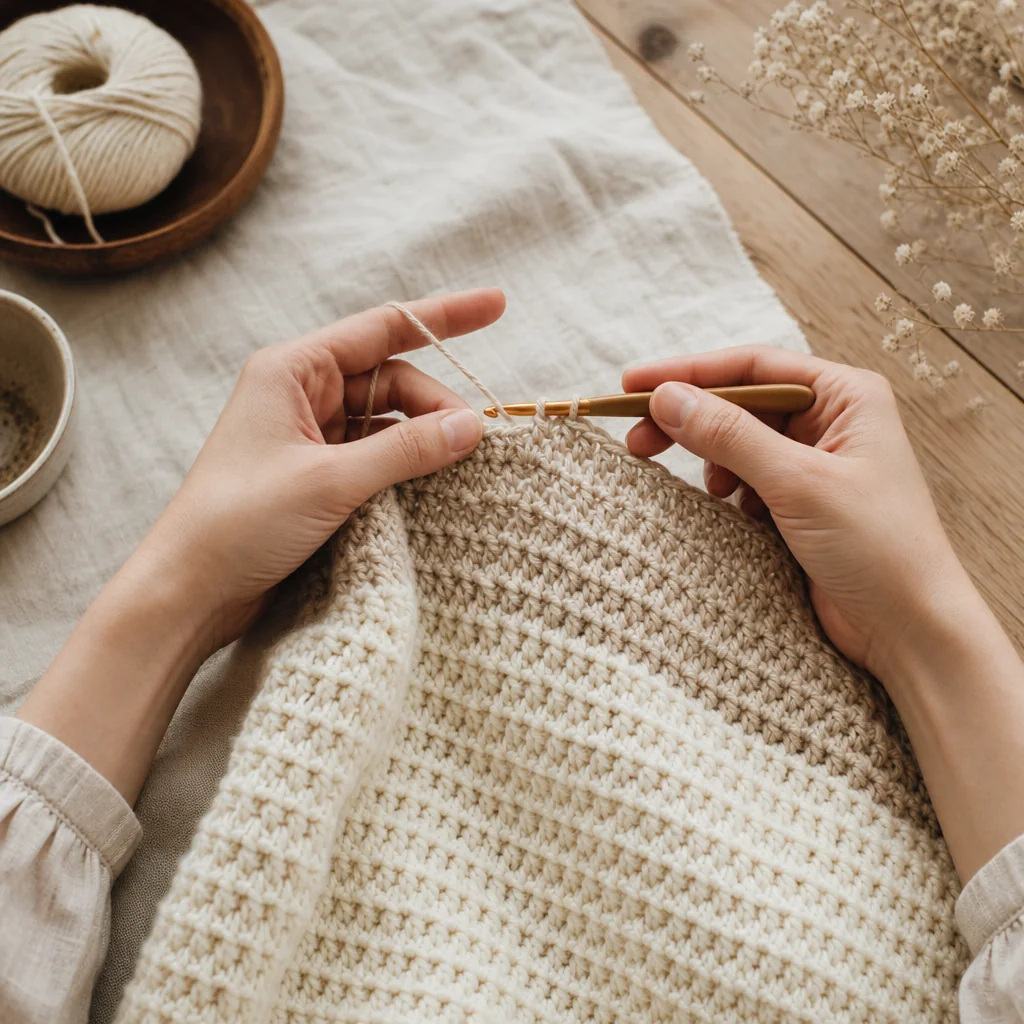
Why Does My Crochet Project Look Uneven?
by Crochets Studio — Written by a Crochets.ca contributor who has frogged more wavy blankets than she'd like to admit and learned every one of these fixes the hard way.
If your crochet is wavy, wider at one end, or bumpy along the edges, it's almost never a talent issue. It's one of three things: tension changes, a miscounted stitch, or turning chain confusion, and each has a quick, specific fix.
How to Diagnose Uneven Crochet
Before fixing anything, look at your piece flat on a table. Where exactly is the problem happening? At the edges, in the middle of rows, or gradually across the whole project? The location tells you which of the four usual suspects is at play, and once you know that, the fix is almost always quick.
Problem: Wavy or Rippled Edges
What it looks like: The fabric ruffles or cups instead of lying flat, especially along the side edges or top and bottom.
The cause: This is almost always a stitch count issue, not a tension issue. If you're adding a stitch here and there without meaning to (very common at the start and end of rows), your project gains width faster than your pattern intends, and the extra fabric has nowhere to go but ripple.
The fix: Count your stitches at the end of every single row for your next project, even if it feels tedious. Compare that count to your pattern or to your very first row. If the number creeps up, check your turning chain and your last stitch of the row specifically. That's where extra stitches sneak in most often.
Problem: The Project Gets Wider or Narrower Over Time
What it looks like: Your swatch or blanket starts narrow and fans out, or starts wide and tapers in, when it's supposed to be a straight rectangle.
The cause: Same root issue as rippling, but more gradual. A single dropped or added stitch per row compounds over dozens of rows. Working into the wrong loop of your turning chain, or skipping the last stitch of a row because it's hard to see, are the two most common culprits.
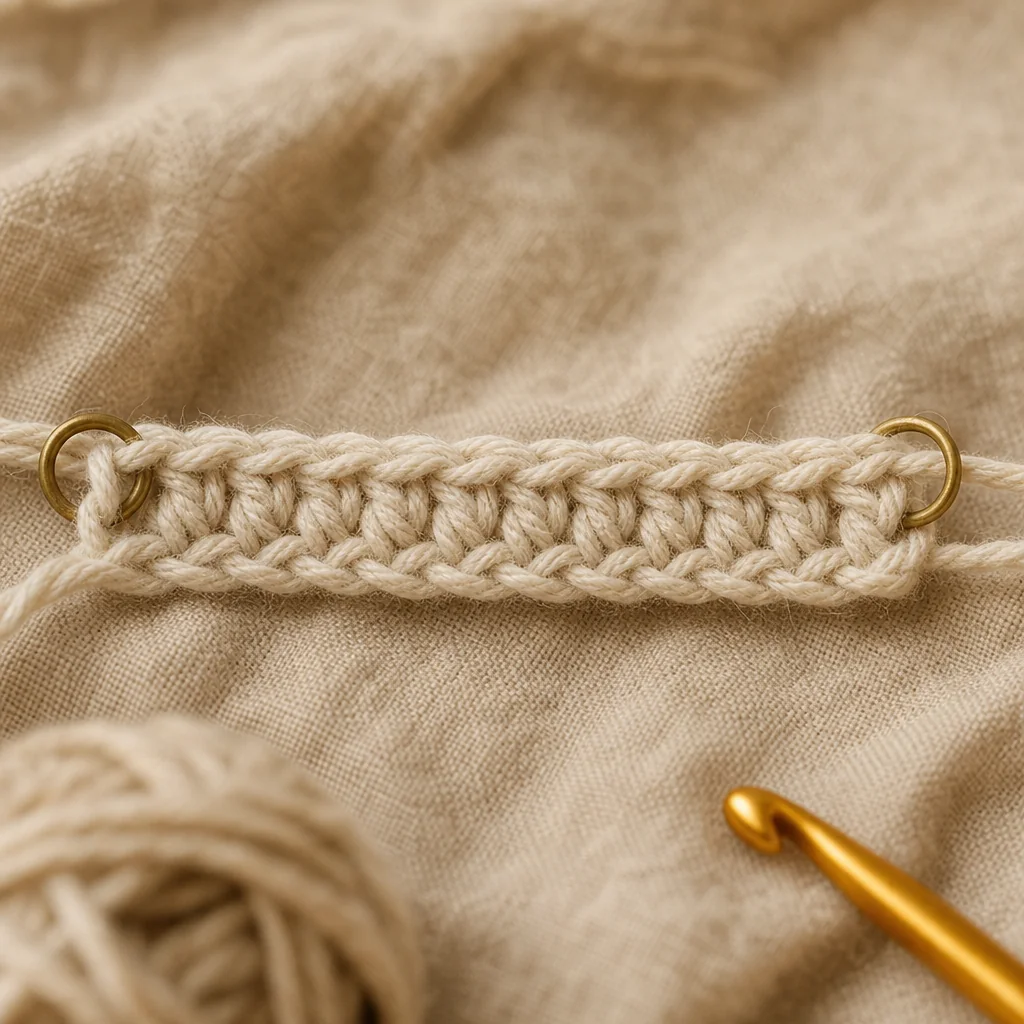
The fix: Use a stitch marker (a scrap of contrasting yarn works fine) in the very first and very last stitch of your foundation row. Every time you turn your work, glance at that marker and confirm your last stitch actually landed there. This one habit solves the majority of width drift.
Problem: Rows Look Different Heights, Some Tight and Some Loose
What it looks like: Some rows sit tall and airy, others look squished, giving the fabric an uneven, bumpy texture even though the stitch count is correct.
The cause: Tension. Your hands naturally tighten up when you're focused or tired, and loosen when you're relaxed or distracted. Since crochet tension isn't held by a tool like it is in knitting, it shifts with your mood more than most beginners expect.
The fix: Aim for a slow, even rhythm rather than speed. Try counting a steady beat in your head as you work each stitch (yarn over, pull through, pull through) so every stitch takes roughly the same amount of time. If you notice your hands are gripping the hook harder than usual, take a short break. Tension differences often show up most after a stressful day, so if you're crocheting to unwind, expect to loosen up your grip a little first.
Problem: One Side Looks Tighter Than the Other
What it looks like: One edge of your piece curls or pulls in, while the opposite edge lies flatter.
The cause: Inconsistent hook angle. If you hold your hook at a slightly different angle depending on which direction you're working, or if you tension the yarn differently in your non-dominant hand as you go, one side of your stitches ends up snugger than the other.
The fix: Pay attention to how your hook sits in your hand at the start of a project and try to keep that grip consistent throughout. A quick check: turn your work upside down periodically and compare the two long edges side by side. If they clearly don't match, slow down and watch your hook angle for the next few rows.
Building Better Habits Going Forward
- Count stitches at the end of every row for your first several projects, not just when something looks off.
- Keep a stitch marker in your first and last stitch so the edges of your work are always visible at a glance.
- Work a slow, even rhythm instead of racing through rows.
- Swatch before starting anything you care about. A small test piece shows tension habits before they show up in a full blanket.
Blocking: The Final Smoothing Step
Once your piece is finished, a light blocking (wetting or steaming the fabric and pinning it flat to dry) evens out a surprising amount of minor tension variation. It won't fix a genuinely miscounted row, but it will relax overly tight stitches and help wavy edges settle down. If blocking doesn't fix it, the issue is a stitch count problem, and that means going back and recounting rather than blocking harder.
Unevenness is one of the most common beginner frustrations, and also one of the most fixable. It comes down to counting and rhythm, not natural ability. Slow down, check your stitches often, and your rows will start matching up.